

Beginner’s Guide to Creating a Behavior Intervention Plan
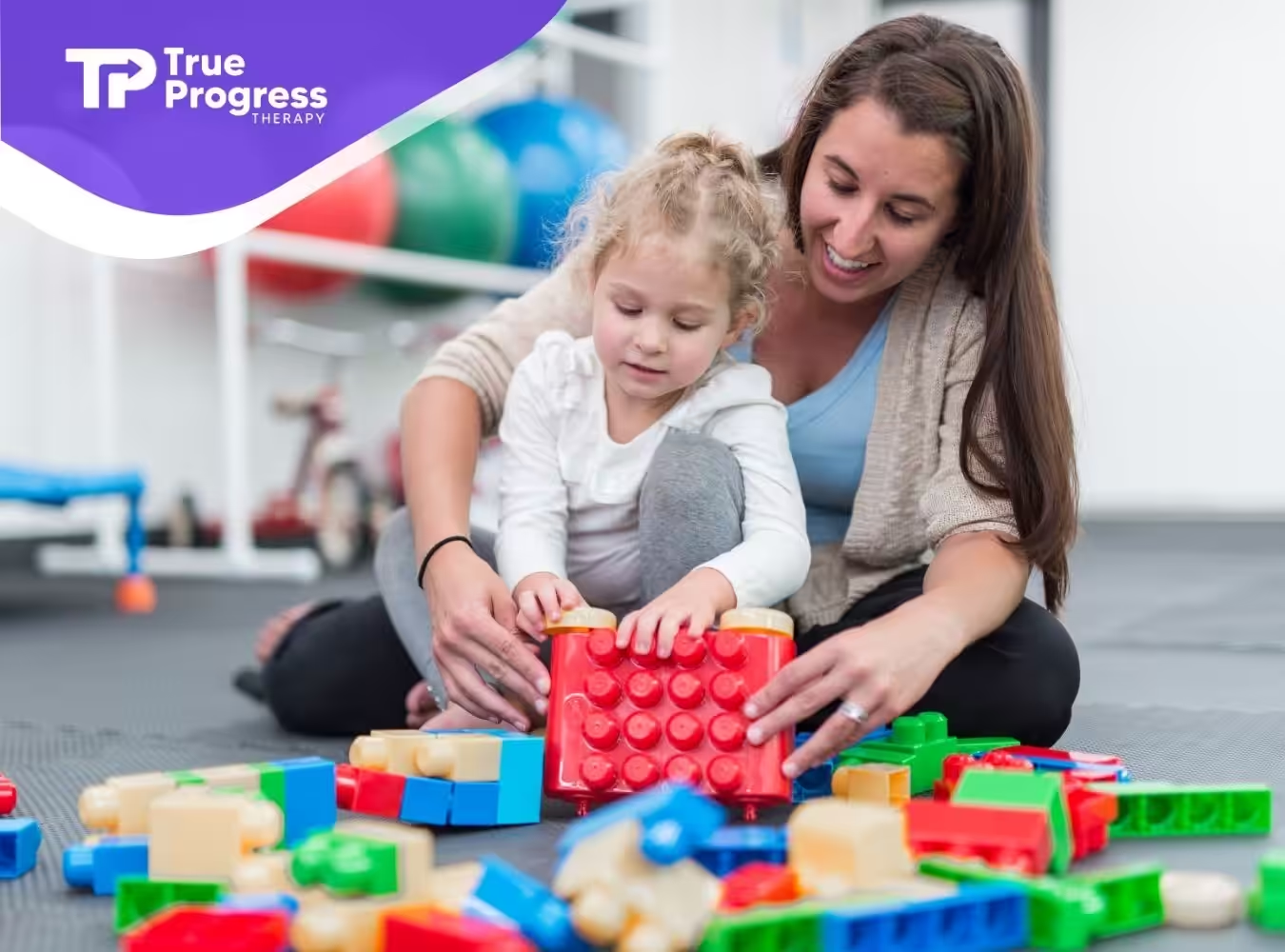
Every person acts in certain ways for a reason. But sometimes, problem behavior can stop learning and get in the way of daily tasks. If your child’s behavior is making it hard for them and others to learn, a well-made Behavior Intervention Plan (BIP) can help. This written plan gives clear steps to swap problem actions with better choices, so students get the help they need. Read this guide to learn the main points about BIPs, the way they work, and why they are so important.
Understanding Behavior Intervention Plans (BIPs)
A behavior intervention plan, or BIP, is a written plan made to help fix certain problem behaviors a student shows. It is based on what comes out of a functional behavioral assessment or FBA. This plan looks at why the behavior happens. It helps the team know what changes to make to support the student and improve their behavior.
The process uses data collection. Data collection means keeping track of what happens before, during, and after a behavior. By watching for these details, teachers can make sure the plan works well and is right for the child. The main goal of the BIP is to help the student learn better ways to act and replace problem behaviors with good ones.
What Is a Behavior Intervention Plan?
A Behavior Intervention Plan (BIP) is a written plan that looks ahead to help change challenging behavior. The main goal is to stop the problem behavior by showing a better way to act instead. This plan uses the function of the behavior to guide what steps to take. It gives people what they need, so they will not have to act out. For example, a BIP can help a student who seeks attention to learn a replacement behavior like using words to ask for help instead of causing a scene.
These plans take thoughtful work to set up and need to be followed every day. They help not just the person with the behavior issue but also tell support staff how to create the right place for change to happen. A BIP is always growing and needs to be checked often. Any changes are made based on what works best. This way, everyone can see clear progress that makes life easier for both the person and those around them.
You can find behavior plans in many places, like therapy, school, or at home. They are important tools if problem behaviors make it hard to learn or get along with others. The right behavior intervention and clear written plan help people make real improvements.
Why Are BIPs Important in Schools and Therapy Settings?
In schools and therapy places, a Behavior Intervention Plan (BIP) helps build the kind of space where both the group and each person can grow. A good BIP looks at a student’s behavior to give them ways to get better with others. With this, the student can also meet their set goals in school or during therapy.
These plans are important because they use positive behavioral interventions. They do not just try to stop bad actions. Instead, they help students learn new ways to act. For example, they might teach students to raise their hand instead of calling out for attention. A BIP is there to show these kinds of new and useful habits.
Another big reason to use a behavior intervention plan is how it keeps things the same for all support staff, like teachers or counsellors. These plans tell everyone what to do when there is a tough time with a student. This helps the school or center be ready to deal with problems that come up. By making a BIP just for the student, schools and therapy centers can give all people more chances to learn, feel included, and build good feelings every day.
Common Misconceptions About BIPs
Although Behavior Intervention Plans are very useful, there are times when people do not fully understand what they do. Some people think a BIP is used for all kinds of behavior. It is not. The BIP is there to focus only on certain problem behaviors that stop a child from making progress.
Some people also believe that BIPs stay the same over time, but that is not true. A BIP needs to change and adjust as there are new changes in a child’s behavior. These plans are not designed to fix things right away. They need steady work, the right steps, and watching the progress closely if you want to meet the BIP goals.
This kind of approach in behavior intervention can help children do well, but it takes care and patience from the people involved.
Myths vs. Facts About Behavior Intervention Plans
Misunderstandings about Behavior Intervention Plans often result in ineffective applications. Let’s examine these in the table below:
Myths | Facts |
|---|---|
BIPs work as instant solutions. | BIPs are long-term strategies requiring consistent effort. |
A BIP is just a behavior tracker. | A BIP is a written plan targeting specific behavioral needs. |
All children benefit equally from BIPs. | BIPs are tailored to address individual behavior problems. |
You must have an IEP to create a BIP. | Any student with challenging behavior can benefit—they don’t need an IEP. |
BIPs focus solely on correcting the behavior. | BIPs emphasize understanding the function of the behavior and teaching alternatives. |
Understanding the best way to use BIPs eliminates confusion, ensuring success for both students and support teams.
When Is a BIP Not the Right Choice?
While Behavior Intervention Plans can be very helpful, they may not work well in every situation. If you get the function of the behavior wrong, a BIP might not fix the real problem. Some students or people may just need small changes or do better with group plans. In these cases, things like classroom changes might be a better choice.
You should think about what is needed to put a BIP in place. It takes time and effort. If there is not enough help or resources, it may be better to look at alternative ways such as bigger group steps instead.
You should also pay attention to additional information. For example, think about any changes that are happening in the child’s world or daily life. This is to make sure what you choose matches their growth and needs without making things harder for them.
Who Needs a Behavior Intervention Plan?
Not everyone who has trouble with actions needs a formal Behavior Intervention Plan. This plan is meant for people who show ongoing challenging behavior. It works best when these problems get in the way of learning, being with others, or reaching goals.
To get the best out of a BIP, the plan teaches new, helpful behaviors that let the person get what they need without causing trouble. It can help a child at school or someone in therapy. A BIP is there to help bring about good changes over time, with the right steps that improve behavior.
Identifying Students or Individuals Who May Benefit
Deciding if a student’s behavior needs a behavior plan means looking at some important things. Here are signs that show who might need help:
- Target behavior that makes it hard for a student to learn or be with others in class.
- Doing things again and again because the reasons for their functions of behavior are not met. This can be when a student wants attention or wants to get away from doing something.
- Not getting better from regular rewards or normal support when these do not really help what the student needs.
- Still needing clear help like visual schedules or plans made just for them.
If you see these things often, then a behavior plan can be a good way to help bring real changes.
Situations That Typically Require a BIP
There are several times when a Behavior Intervention Plan (BIP) is needed. One of the main reasons is when there are ongoing behavior problems that make it hard for the class to work together. For instance, if a child keeps hitting their classmates during group work, they may need clear reinforcement plans.
Some other times are when students do not get better even after many functional assessments, or if it is clear that a student has trouble moving from one activity to the next. This can show deeper issues that can be helped with positive behavioral interventions.
Some things that can make a BIP needed are:
- Too much time spent on fights or arguments while in class.
- Issues show up often when the child has to learn new skills.
- The student’s anger or mean actions stop others from working together.
- Saying no to following directions again and again, even if teachers already tried to help.
A plan like this lets teachers and helpers give the student what they need. These steps are made to fit changing needs and help them do well in class with their classmates.
Beginner’s Guide: How to Create a Behavior Intervention Plan
Creating a good behavior intervention plan starts by making clear what the target behavior is. It is important to use a full functional behavior assessment, or FBA, to find out the function of the behavior. This will also help you see what happens before and after the behavior. Use the best ways in positive behavioral interventions to help with this work. Start by teaching new replacement behaviors that can take the place of the problem behavior. When you work with caregivers and support staff, it makes the plan better for everyone. They can help give clear steps and use visual schedules. This helps students learn and keep more positive behaviors in the classroom.
Essential Tools and Resources to Get Started
You can use many tools and resources to help with a behavior intervention plan. Using templates for behavior plans can make the writing side easier. It also helps you, to be sure that you include every key part you need. When you work with functional behavior assessments (FBAs), you get to know why the problem behavior happens. This means you can pick better ways to help.
Visual schedules are good at supporting positive behaviors, and they help keep students on track. It also helps a lot when you work together with the support staff and caregivers. These people can give you ideas you might not have thought about. Working as a team also makes sure the BIP fits the child and matches what they need.
Step-by-Step Guide to Developing an Effective BIP
Creating a good behavior intervention plan follows a step-by-step process. First, you need to clearly say what the target behavior is. Use words that be specific and easy to measure, so you can have a starting, or baseline, point to check how things change over time. Next, do a full functional behavior assessment, or FBA, to find out the function of the behavior. This step helps to see what may trigger it and what happens afterward. This information guides you to make proactive changes and plan for positive behavioral interventions that help the student learn new, better ways to act. You should also work with support staff, caregivers, and teachers. These people know the student and can give help. Working together helps everyone support the student’s behavior and boosts their chance to get better.
Step-by-Step Process for Creating a BIP
Making a good behavior intervention plan needs a step-by-step method. First, you should clearly state what the target behavior is. This is an important part because it helps later steps. Next, you have to do a functional behavior assessment. This tells us what the function of the behavior is and what sets it off.
Caregivers can use something called antecedent strategies. These help you stop behavior problems before they get worse. It is also important to watch how things are going. Check the data you get and change the plan if you need to. This helps keep the intervention working well and supports the student’s behavior over time.
Step 1: Define the Target Behavior Clearly
Clearly outlining the target behavior is an important first step to make a good behavior intervention plan. Start by finding out exactly what problem behavior needs your attention. Make sure it can be seen and measured easily. Use functional behavior checks to collect facts about when and how the behavior happens. Work with support staff and caregivers to put together a written plan. This plan should describe what the behavior looks like, what happens before it, and what comes after. By doing this, you build a strong base for any future behavior interventions.
Step 2: Conduct a Functional Behavior Assessment (FBA)
An fba, or functional behavior assessment, is very important when you want to understand a child’s behavior. In this process, the goal is to collect data. This data helps you figure out the function of the behavior, what triggers it, and what keeps it going. When you use a clear approach like the ABC model (antecedent-behavior-consequence), it gets easier to see patterns in how and why the problem behavior happens. Working with caregivers and staff at this stage helps you get the full story about the child. This teamwork can lead to new ways to help the child change their behavior in a more positive way.
Step 3: Identify Triggers and Consequences
Knowing what causes and follows problem behavior is big when you set up a behavior plan. There are things that start the problem behavior and things that come after that help shape if it will happen again. You use something called a functional behavior assessment to see what the behavior does for the person. This kind of assessment not only shows the function of the behavior but also ties it to triggers, like what is happening around them or what other kids are doing. When you see these patterns, you can look for alternative ways to act and help positive behaviors show up more. This lets you give positive behavioral interventions that are good for the child’s behavior and help them grow.
Step 4: Develop Proactive Intervention Strategies
Creating proactive intervention strategies means you first find replacement behaviors that fit the same need as the problem behavior. Use techniques like reinforcement. This will help people choose good actions and build better habits over time. A visual schedule can make things easier for everyone. It helps people see what will come next and face any changes more smoothly. Also, try using antecedent strategies. These help avoid situations that may cause challenging behavior. It is important for support staff and caregivers to use these approaches. When they do, they build an environment where students can do well and feel supported.
Step 5: Monitor, Evaluate, and Adjust the Plan
Keeping a close watch on a behavior intervention plan is important. It helps you see if the plan is working and if it needs to change. Use data collection to track the child’s behavior over time. This makes it easy to spot changes, good or bad.
When you look at the data, you can know what is going well in the plan. This helps you give better reinforcement for positive behaviors. You can also change things to solve any behavior problems that do not go away.
Having support staff and caregivers be part of this work is helpful. They give good feedback and ideas. With their help, you can try new ways when needed. This makes the plan stronger and helps the child make progress.
Evaluating and Monitoring the Effectiveness of a BIP
Regular check-ins are key to knowing if a behavior intervention plan is working. When caregivers and support staff use data collection methods, like ABC charts or counting how often something happens, they can get a good look at the baseline. This means they can see how things were at the start and keep an eye on any changes as time goes by. It is important to always look at how things are going with the set goals. This helps make sure any steps in the behavior intervention plan are still helpful and lead to more positive behaviors. When you use data collection and the information from your abc and baseline, you can change things as needed. This way, you can help get ahead of tough situations and support positive behaviors in the student’s everyday life.
Data Collection Methods and Progress Tracking
Using good data collection is key when you want to see how well a behavior intervention plan, or BIP, is working. You need to look at the topography of the target behavior and how often it happens. This helps you set a baseline and see patterns as time goes by. When you use techniques like ABC data tracking, support staff can watch what happens before (antecedents), during (behaviors), and after (consequences) the behavior. This kind of progress tracking can tell you if the interventions are working or not. It also helps you make changes when you need to, teach replacement behaviors, and reward the positive behaviors that help reach the main BIP or bip goals.
Conclusion
Creating a behavior intervention plan is a key step to help manage tough behaviors and encourage good changes. When you know the reasons behind a behavior and use the right strategies, caregivers and support staff can really help a student grow in the right way. Keeping up with data collection and having regular check-ins makes sure the plan stays useful and can change if needed. In the end, a strong BIP not only helps with positive behavioral interventions but also makes the child’s school life better. This sets them up for long-term success in their growth and learning.
True Progress Therapy is the best ABA provider in New Jersey, specializing in creating personalized Behavior Intervention Plans (BIPs) that drive positive change. Our expert team works closely with families to design tailored strategies that address specific behavioral challenges, promoting lasting progress in everyday settings. With a focus on empathy, skill-building, and measurable outcomes, True Progress Therapy empowers families to see real results. Ready to create a plan that works for your child? Contact True Progress Therapy today to get started on the path to progress.
Frequently Asked Questions
Can a BIP Be Used Without an IEP?
Yes, you can use a Behavior Intervention Plan (BIP) even if there is no Individualized Education Program (IEP). But, a BIP often works best when it is used with an IEP. This is because the BIP can help solve certain behavior issues as part of the whole school plan.
How Long Does It Take to See Results from a BIP?
Results from a Behavior Intervention Plan (BIP) can be different for everyone. You may see some early changes in just a few weeks. To get the full effect, it may take a few months. The time it takes depends on how well you use the plan and on things like how complex the target behavior is.
Who Should Be Involved in Creating and Implementing a BIP?
In making and using a Behavior Intervention Plan (BIP), there are a few important people who take part. The teachers, parents, school counselors, and special education staff all need to work together. When they share what they know, they get a full picture of the student’s behavior. This helps them put together the right steps and support to meet the student’s needs with the right behavior intervention. This way, everyone can help make things work well for the student.
What Happens If the BIP Is Not Working?
If the BIP is not working the way you want, you need to look at the plan again. This could mean you need to go back and check your data collection. You might have to look for things you missed that are setting off the behavior. It may also help to change the steps you are taking. Working with the team, like parents and teachers, can make the bip better. This way, the plan has a better chance to help.
Sources:
- https://childmind.org/article/what-is-a-behavior-intervention-plan/
- https://www.cde.state.co.us/cdesped/ta_fba-bip
- https://asdnetwork.unl.edu/virtual-strategies/replacement-behaviors/
- https://www.nea.org/professional-excellence/student-engagement/tools-tips/positive-behavioral-interventions-and-supports
- https://www.medicaid.gov/medicaid/home-community-based-services/home-community-based-services-quality/functional-assessments-quality-improvement
Related Posts
What Happens in Your First ABA Therapy Session? A Parent’s Walkthrough
Parents almost always brace for something clinical. A room, a clipboard, a set of tasks their child will either pass or fail. Then I sit down on the floor with a bin of toys and spend an hour doing what looks, from the doorway, like nothing much at all Here is what happens in your […]
Read article
True Progress Therapy Brings Personalized ABA Services Into New Jersey Homes
Media Contact: True Progress Therapy 732-607-8783 info@trueprogresstherapy.com https://trueprogresstherapy.com/ NEW JERSEY, USA — For families navigating autism and developmental challenges, finding the right support shouldn’t mean disrupting daily routines. True Progress Therapy is redefining care
Read article
What Are the Three Main Causes of Autism?
Updated: June 9, 2026 If your child was recently diagnosed with autism—or you’re waiting on an evaluation—there’s a good chance one quiet question keeps surfacing late at night: "Did I cause this?" Maybe you’re replaying your pregnancy, a medication you took, your family history, or a hundred small
Read article