

Raising a Bilingual Autistic Child: Does a Second Language Cause Delays?
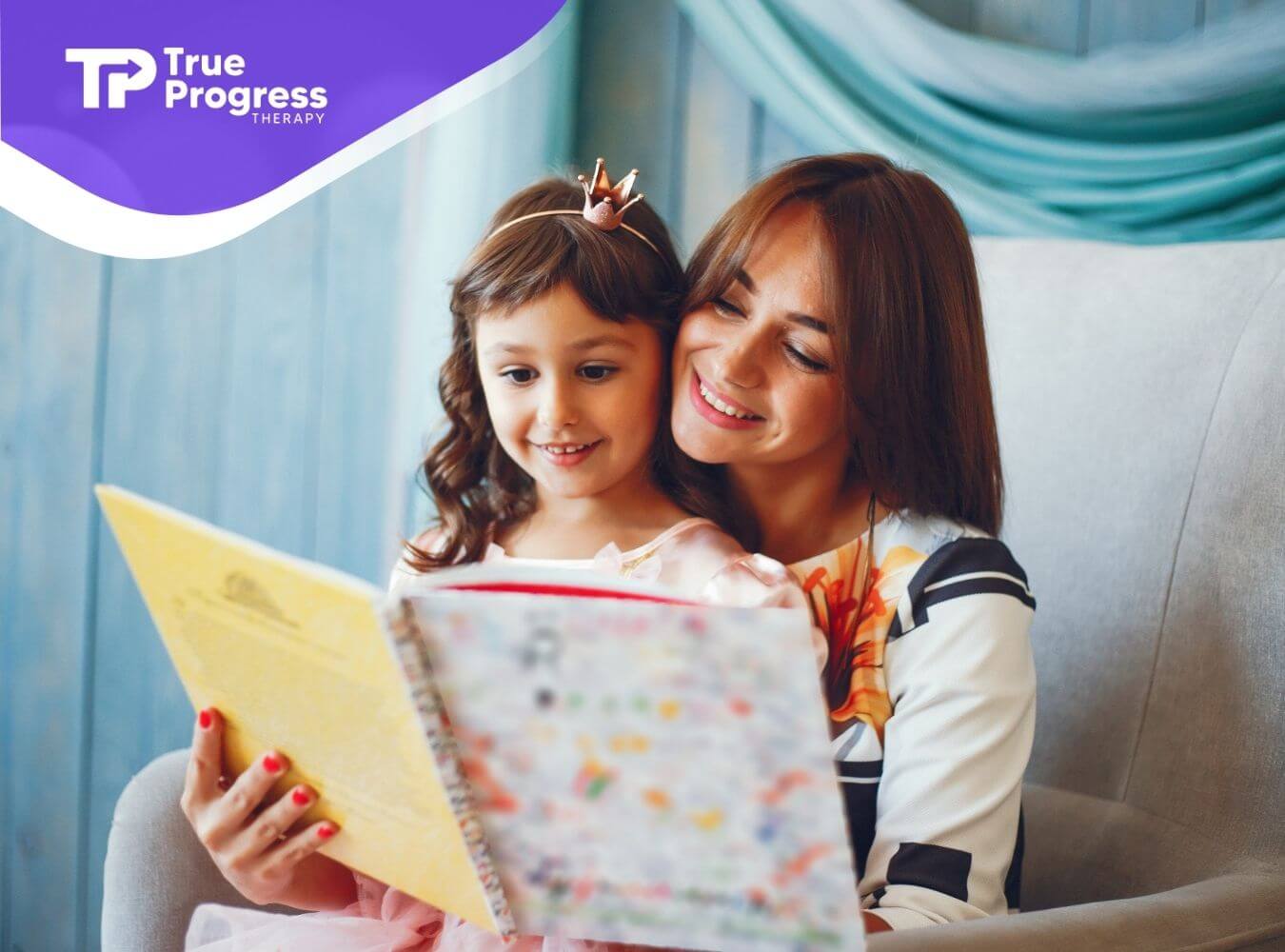
After years into working with bilingual families at True Progress Therapy, I can usually tell within the first few minutes of an intake whether a parent has already been told to drop a language. There is a specific kind of guilt in how they phrase it: “We stopped speaking Spanish at home, just to be safe.” Safe from what is rarely explained.
Somewhere along the way, a pediatrician, a school evaluator, or a well-meaning relative floated the idea that a second language would overload a bilingual autistic child’s brain and slow speech down even further. It is one of the most persistent pieces of advice I hear in this field, and it does not hold up against the research on bilingualism and autism spectrum disorder. If your household speaks two languages and your child was recently diagnosed with autism, you should not have to choose between your child’s development and your family’s language.
The Advice Bilingual Families Keep Hearing
This comes up often enough that I now ask about home language during every intake, before a parent has to bring it up themselves. The advice usually traces back to an old assumption that children with autism have a limited capacity for language, so every additional language competes for the same small pool of resources.
That idea made a certain kind of intuitive sense before anyone tested it. It simply did not hold once researchers looked closely at how bilingual children with autism actually develop language over time. It sits alongside a handful of other stubborn autism myths and facts I hear on repeat, most of which trace back to the same pattern: an old assumption that never got tested against real data.
Where the One Language Only Advice Started
Some of this comes from outdated clinical guidance that favored simplifying a child’s environment in every possible way, including language input.
Some of it comes from confusing correlation with cause. Children with autism who happen to grow up in bilingual homes were sometimes compared to monolingual children without autism, which tells you nothing about whether the second language was the reason for any delay.
The more useful comparison, bilingual children with autism against monolingual children with autism, tells a very different story, which I get into below.
What Parents Are Being Asked to Give Up
When a family drops a home language, it is rarely a small change. It often means a grandparent can no longer speak comfortably with a grandchild. It means lullabies, family jokes, and religious or cultural traditions that live in one language start to feel out of reach. I have sat with parents who described feeling like they were asking their child to leave part of the family behind, and that grief is real even when it is well-intentioned.
It also tends to show up alongside a related worry I hear constantly, whether something the parents did caused their child’s autism in the first place. We cover that question directly in our piece on the causes of autism, and the short answer is the same one I give here: you are not the reason, and a second language was never the reason either.
What the Research Shows About Two Languages and Autism
The research on this question has grown substantially over the past decade, and it points in a consistent direction. Bilingual exposure does not appear to add a language delay on top of autism, and dropping a language does not appear to speed up the language skills a child already has in progress.
Autism Drives the Delay, Not the Second Language
A systematic review published in 2024 pooled data across a dozen studies and hundreds of children with autism spectrum disorder, comparing bilingual and monolingual groups directly.
The reviewers reported a consensus among the studies: bilingualism does not create additional difficulty with language development in children with ASD from around age three onward. In other words, the delays families notice tend to trace back to autism itself, the same way they would in a monolingual household, not to the presence of a second language.
Bilingual Exposure Does Not Slow Long-Term Development
A 2024 study out of Montclair State University looked specifically at toddlers with ASD using a standardized developmental assessment, tracking language, cognitive, and social-emotional scores. Age predicted language scores more strongly than bilingual status did, and the researchers found no meaningful interaction between autism and bilingualism on any of the three domains they measured. Their conclusion was direct: children with autism can be raised in bilingual homes without it affecting their long-term development.
I want to be honest about the nuance here too, because balanced information builds more trust than a blanket reassurance. Some individual studies have found small differences in vocabulary size between bilingual and monolingual children with autism at a single point in time, usually because a bilingual child’s vocabulary is split across two languages rather than concentrated in one.
When researchers add both languages together, total vocabulary tends to land in the same range as monolingual peers. A smaller vocabulary in one language is not the same thing as a smaller vocabulary overall, and it is not evidence of harm.
Why Dropping a Language Can Cost a Family More Than It Saves
Once I can show a family the research, the next conversation is usually about what actually gets lost when a language gets dropped out of caution rather than necessity. This is where the clinical picture and the family picture start to overlap.
Relationships That Get Harder to Reach
I worked with a family last year where the child’s primary bond, before starting services, was with a grandmother who spoke almost no English. The family had been told to switch to English-only at home after the diagnosis. Within a few months, the grandmother mentioned that her grandson had stopped initiating anything with her at all.
We did not need a formal assessment to know that reintroducing her language into his day was worth trying. His engagement with her recovered within weeks of restoring consistent exposure.
Cultural and Emotional Language
Children pick up more than vocabulary from a language. They pick up the rhythm of comfort, the specific words a parent uses when a child is upset, and the humor that only really lands in the language it was born in. Asking a family to set that aside on the assumption that it is somehow risky is a real cost, and it is one families should not have to pay without solid evidence behind the request.
What Genuinely Helps Communication Grow in Bilingual Homes
None of this means language exposure is a passive process where anything goes. What helps a bilingual autistic child build strong communication skills looks a lot like what helps any child, just applied consistently and with intention in both languages.
Rich, Consistent Input in Both Languages
Children learn language from hearing it used often, in context, paired with real objects, real routines, and real people responding to them. A parent who is fluent and comfortable in one language will naturally give richer input in that language than in a second one they are still learning themselves.
The goal is not to force equal exposure. It is to make sure each language your child hears is used with warmth, consistency, and enough repetition to build meaning.
How In-Home ABA Supports Bilingual Goals
This is a place where in-home ABA therapy tends to fit bilingual families especially well, because sessions happen inside your actual home language environment rather than a clinic setting where only English gets used.
A BCBA can build communication goals that reflect how your family actually talks, including which language a request should be modeled in, and can coach the caregivers who speak each language on how to reinforce it consistently. If your family has recently gone through waiting on a diagnosis and is now building a plan, this is exactly the kind of detail worth raising at your first BCBA assessment.
Common Questions I Hear From Bilingual Families
A few specific worries come up over and over in these conversations, often from parents who have already read conflicting advice online and just want a straight answer.
Will Two Languages Confuse My Child
Mixing words from both languages in the same sentence, sometimes called code-switching, is a completely typical part of bilingual development, autism or not. It is not confusion. It usually reflects a child reaching for whichever word comes to mind first or fits the moment best, and it tends to settle as language skills mature.
Should We Wait Until Speech Catches Up to Add a Second Language
There is no research supporting a wait-and-see approach here. Delaying a second language does not appear to speed up progress in the first one, and it removes a source of connection your child may already rely on. If a language is already part of your child’s world, the research supports keeping it there.
Building a Language Plan With Your Child’s Care Team
The most useful thing a bilingual family can do is bring the language question into the room early, rather than deciding on their own or quietly following advice they were never sure about. A good BCBA will ask about your home languages before writing a single goal, and should be able to explain, in plain terms, how each language will show up in therapy.
This same intentionality is worth carrying into how you talk with your child directly about their diagnosis, in whichever language feels most natural for that conversation. Our guide to explaining autism to children has age-appropriate scripts that translate easily once you know the concepts you want to get across.
At True Progress Therapy, the language conversation is built into our intake process alongside services like:
- In-home ABA therapy, where sessions happen in the language environment your family actually lives in
- Parent training, so every caregiver who speaks a different language at home is using consistent strategies
We currently serve families across New Jersey, with services expanding to Missouri soon. If your family is navigating a new diagnosis and wondering whether your home language is part of the problem, it almost certainly is not, and we would rather talk that through with you directly than leave you guessing.
Schedule a free consultation with our team to start building a plan that fits how your family actually communicates.
Frequently Asked Questions
Does speaking two languages cause autism or make it worse?
No. Bilingualism does not cause autism spectrum disorder and there is no evidence that it worsens autism symptoms. These are separate, unrelated aspects of a child’s development.
Is it too late to reintroduce a language we stopped speaking?
It is rarely too late. Children can and do regain exposure to a language that was set aside, especially with consistent, warm reintroduction from a fluent caregiver. A BCBA or speech-language pathologist can help you rebuild that exposure gradually.
Should my child’s therapy be conducted in English only?
Not necessarily. Therapy goals can be written to reflect your home languages, and many families benefit from a BCBA who coordinates directly with a bilingual speech-language pathologist when one is available.
What if my child mixes languages within the same sentence?
That is typical bilingual development, not a red flag. Children, autistic and non-autistic alike, often draw from both languages before their vocabulary is developed enough to stay in one at a time.
How do I know if a language delay is from autism or bilingualism?
A comprehensive evaluation that accounts for total vocabulary across both languages, not just one, gives the clearest picture. This is a question worth raising directly with your child’s evaluator or BCBA rather than guessing on your own.
Sources:
- Garrido, D., López, B., & Carballo, G. “Bilingualism and language in children with autistic spectrum disorder: a systematic review.” PubMed, National Library of Medicine, 2024. https://pubmed.ncbi.nlm.nih.gov/38065434/
- Phillips, S., et al. “Effects of bilingual language exposure on toddlers with autism spectrum disorder.” National Center for Biotechnology Information (NIH), 2024. https://www.ncbi.nlm.nih.gov/pmc/articles/PMC11695126/
- Digard, B. G., Sorace, A., Stanfield, A., & Fletcher-Watson, S. “Bilingualism in autism: Language learning profiles and social experiences.” PMC, National Institutes of Health, 2020. https://pmc.ncbi.nlm.nih.gov/articles/PMC7549289/
- “Language and communication skills in multilingual children on the autism spectrum: A systematic review.” PMC, National Institutes of Health. https://pmc.ncbi.nlm.nih.gov/articles/PMC10375003/
- Beauchamp, M. L. H., Rezzonico, S., & MacLeod, A. A. N. “Bilingualism in School-Aged Children with ASD: A Pilot Study.” PubMed, National Library of Medicine, 2020. https://pubmed.ncbi.nlm.nih.gov/32306218/
- Gonzalez-Barrero, A. M., et al. “Bilingual children with autism spectrum disorders: The impact of amount of language exposure on vocabulary and morphological skills at school age.” PubMed, National Library of Medicine, 2018. https://pubmed.ncbi.nlm.nih.gov/30456826/
- NICHD & NIDCD. “Language and Literacy Development in Early Dual-Language Learners” (workshop summary). Eunice Kennedy Shriver National Institute of Child Health and Human Development, NIH, 2016. https://www.nichd.nih.gov/about/meetings/2016/081816
- “Bilingualism and Autism: A Summary of Current Research and Implications for Augmentative and Alternative Communication Practitioners.” Perspectives of the ASHA Special Interest Groups, American Speech-Language-Hearing Association. https://pubs.asha.org/doi/10.1044/persp3.SIG12.146
- “Bilingualism and Autism: Addressing Parents’ Frequently Asked Questions.” Perspectives of the ASHA Special Interest Groups, American Speech-Language-Hearing Association. https://pubs.asha.org/doi/abs/10.1044/persp3.SIG1.98
- Digard, B. G., et al. “Bilingualism in Autism: Language Learning Profiles and Social Experiences.” ERIC, Institute of Education Sciences (U.S. Department of Education), 2020. https://eric.ed.gov/?id=EJ1269973
Related Posts
Autistic Sleeping Positions: Are They Different From Typical Sleep?
Understanding Sleep Issues In Autism Children and adults on the autism spectrum often have unique sleep patterns and sensitivities. Research shows that autistic individuals are nearly twice as likely to face sleep disturbances compared with their neurotypical peers. This gap can create a ripple effe
Read article
Understanding the Autistic Hug (and the Third Eye Hug): What It Means
Key Highlights In a world where communication often defaults to words, the significance of physical touch, particularly in the context of autism, is frequently overlooked. Hugs can carry profound meanings and serve as powerful connectors for many individuals on the spectrum. They can act as a bridge
Read article
What Is the Hardest Age for Autism, and Does Autism Peak?
There’s no single age that’s the hardest for autism. The challenges tend to shift as a child grows. That said, many families agree that certain stages feel more overwhelming than others—especially when expectations suddenly change. What age feels hardest for autism? Autism doesn’t get “hard” at one
Read article