

Are Time-Outs Effective for Children with Autism?
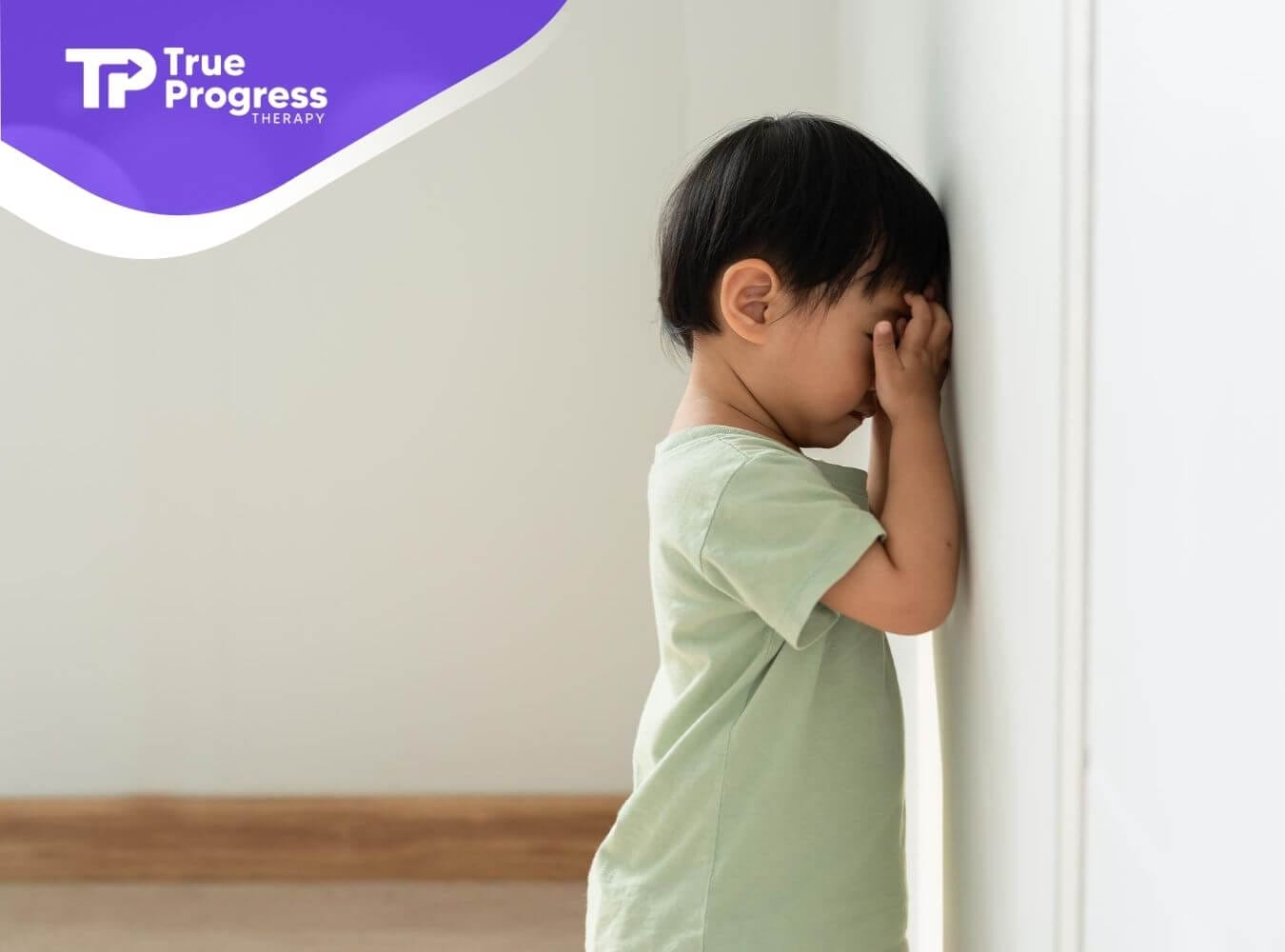
Time-outs are often seen as a simple fix for challenging behaviors. But when a child has autism, behavior is rarely simple.
Are time-outs effective for children with autism? To answer that, we need to look beyond punishment and explore how autism-related behaviors are shaped by communication, sensory processing, and reinforcement patterns.
At True Progress Therapy, we often work with families who have tried time-outs for challenging behaviors such as tantrums, aggression, noncompliance, or meltdowns. Sometimes they see short-term results. Other times, behaviors escalate. The difference usually comes down to one key factor: understanding the function of the behavior.
In Applied Behavior Analysis (ABA therapy), a time-out is defined as the brief removal of access to reinforcement following a specific behavior. It is not isolation, shaming, or emotional withdrawal. When implemented correctly, it is structured, short, and part of a comprehensive behavior intervention plan.
However, many behaviors in autistic children are not attention-seeking. They may be triggered by:
- Sensory overload
- Communication delays
- Anxiety
- Executive functioning challenges
- Difficulty with transitions
- Task frustration
If a child is overwhelmed or unable to communicate effectively, sending them to time-out does not teach a replacement skill.
We once supported a child who was repeatedly placed in time-out at school for yelling during math assignments. After conducting a functional behavior assessment, we discovered the behavior occurred when tasks became too abstract. Once visual supports and task breakdowns were added—and the child was taught how to request help—the yelling decreased significantly. Time-outs were no longer needed.
This is why behavior analysis for autism focuses first on understanding why a behavior is happening.
Time-outs may be effective when:
- The behavior is clearly maintained by attention
- The child understands expectations
- Replacement behaviors have been explicitly taught
- The time-out is brief and consistent
- It is part of a structured ABA program
Even then, time-out is rarely our first strategy. In autism treatment, we prioritize skill-building.
More effective positive behavior support strategies often include:
- Teaching functional communication (e.g., “I need a break”)
- Using visual schedules and clear expectations
- Reinforcing appropriate behaviors
- Providing sensory regulation supports
- Adjusting task difficulty
For example, during our In-home ABA therapy sessions, we frequently replace escape-motivated behaviors with break cards or structured choices. When children learn how to appropriately request what they need, challenging behaviors often decrease naturally.
Overusing time-outs can increase anxiety, especially if the child does not fully understand why they are being removed. Behavior in autism is often communication. If we do not teach alternative communication skills, the behavior may continue or intensify.
At True Progress Therapy, our personalized ABA services in New Jersey focus on identifying the function of behavior and building replacement skills through reinforcement-based strategies. We also provide structured parent training so families feel confident implementing consistent, evidence-based approaches at home.
So, are time-outs effective for children with autism?
They can be—but only when used carefully, ethically, and as part of a broader autism behavior intervention plan. In many cases, proactive teaching strategies, positive reinforcement, and functional communication training are more effective long-term solutions.
If you’re struggling with challenging behaviors at home or school, our team at True Progress Therapy can help you determine the most effective, evidence-based approach. With the right support, behavior change is possible—and it starts with understanding.
FAQs
1. Are time-outs recommended in ABA therapy for autism?
Time-outs may be used in ABA therapy, but they are not the first-line intervention. ABA prioritizes identifying the function of behavior and teaching replacement skills before considering time-out procedures.
2. Why don’t time-outs always work for autistic children?
Many behaviors are driven by sensory needs, communication challenges, or anxiety rather than attention-seeking. If the root cause isn’t addressed, time-outs may not reduce the behavior.
3. What is a better alternative to time-outs for autism behavior problems?
Effective alternatives include functional communication training, visual supports, positive reinforcement, and structured break systems. These approaches build skills rather than simply suppress behavior.
4. Can time-outs make autism meltdowns worse?
Yes, if a meltdown is caused by sensory overload or emotional dysregulation, removing a child without providing regulation support can escalate distress.
5. How can parents know which behavior strategy is right?
A functional behavior assessment conducted by a qualified ABA provider can determine why behaviors occur and guide the most appropriate, evidence-based intervention plan.
Sources
- https://www.autismspeaks.org/applied-behavior-analysis
- https://fragilex.org/behaviors/ten-rules-time/
- https://www.appliedbehavioranalysisedu.org/10-questions-to-ask-yourself-when-time-outs-arent-working/
- https://childmind.org/article/are-time-outs-effective-kids-pros-and-cons/
- https://eric.ed.gov/?id=ED158162
Related Posts

What Happens During ABA Insurance Authorization in New Jersey?
Not sure what happens after you call? Walk through ABA insurance authorization in NJ, including benefits checks, treatment plans, insurer reviews, & approvals.
Read article
How Long Does It Take to Start ABA Therapy in New Jersey?
From diagnosis to the first in-home session, here is how long ABA therapy takes to start in NJ, plus the paperwork that keeps your family moving toward care.
Read article
What Happens in Your First ABA Therapy Session? A Parent’s Walkthrough
Parents almost always brace for something clinical. A room, a clipboard, a set of tasks their child will either pass or fail. Then I sit down on the floor with a bin of toys and spend an hour doing what looks, from the doorway, like nothing much at all Here is what happens in your […]
Read article