

Helping Siblings Explain Autism to Their Own Friends
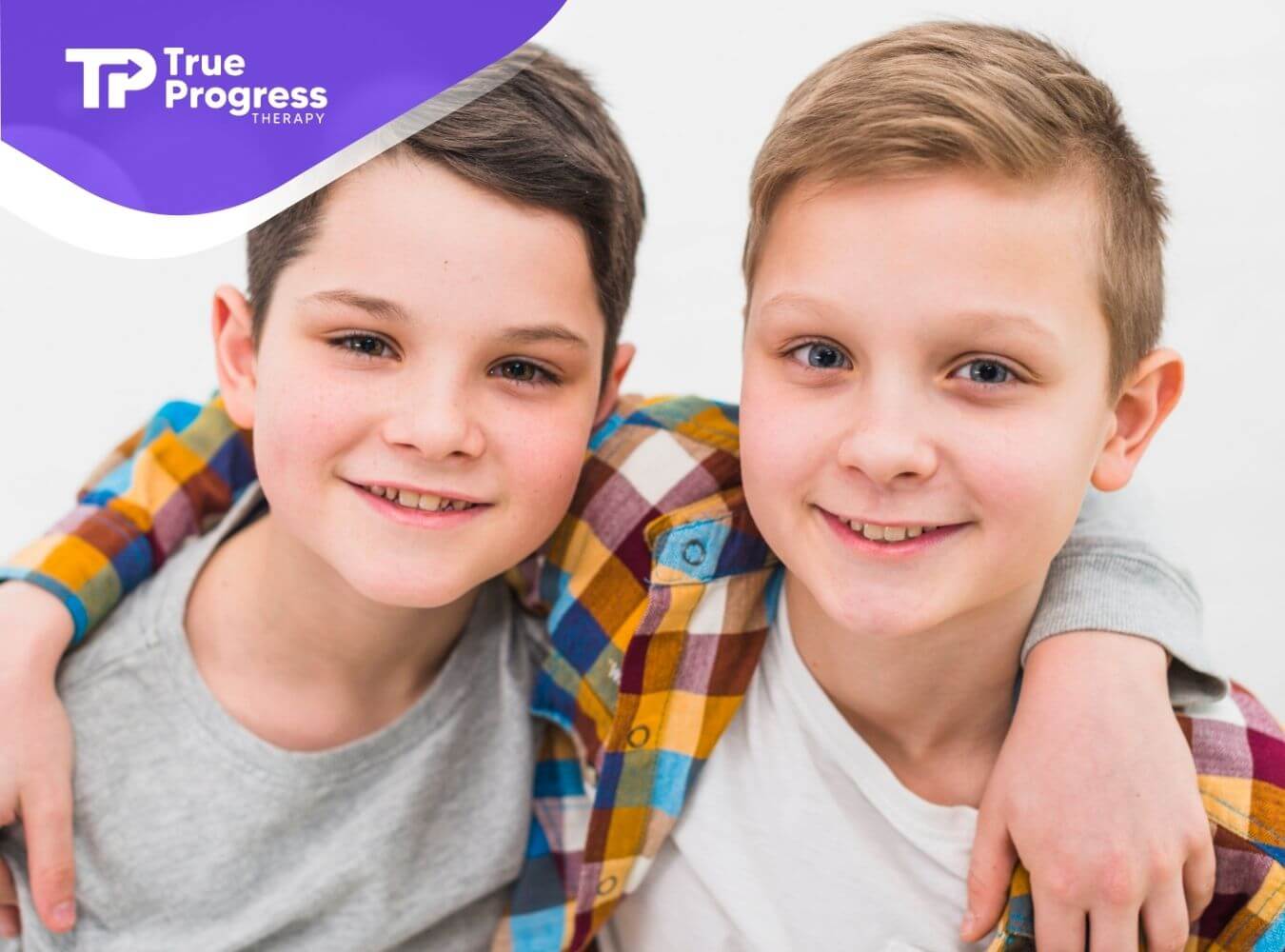
Nearly every family I work with underestimates how soon this conversation actually arrives. Parents tend to picture it as a middle school problem, something to prepare for eventually, once their child is old enough to really understand what autism means. A family in Lakewood figured the same thing, that they had years before their daughter would need to explain her brother’s autism to a friend. Instead, she needed the words by second grade, the first time a classmate asked, right there at pickup, why her brother wore headphones every single day
Why This Conversation Sneaks Up on Families
Parents plan carefully for how they will explain autism to the sibling themselves. Far fewer plan for the moment the sibling has to explain it to someone else. That gap catches families off guard because the two conversations require different things. One happens on your terms, at home, when you are ready. The other happens on a swing set, mid-sentence, in front of an audience.
With about 1 in 31 children now identified with autism spectrum disorder, most classrooms and friend groups already include a family navigating this, which means the conversation is coming for far more siblings than parents tend to expect.
The Moment a Friend Finally Notices
It rarely arrives with warning. A friend visits for the first time and hears a sibling repeating a phrase from a show. A classmate sees a meltdown at pickup that looks, from the outside, like a tantrum. A teammate asks why a brother wears headphones at a birthday party. These moments are neutral on their own. What determines whether they go well is whether the sibling has language ready to reach for.
Why Siblings Often Stay Quiet
In my experience, silence is rarely about embarrassment alone. Siblings are often protecting someone, either their brother or sister from being judged, or their own friendship from getting complicated. Without a script, quiet feels like the safest option, even when it costs them socially in the long run.
What Siblings Are Really Trying to Protect
Before I hand a family any scripts, I want to understand what the sibling is guarding against, because that shapes which words will actually land for that particular child.
Protecting Their Brother or Sister
Older siblings especially tend to feel protective before anything else. They do not want a friend’s first impression of their brother or sister to be a negative one, so they would rather say nothing than risk the wrong reaction. Giving them accurate, confident language is often the fastest way to ease that protectiveness, because it puts them back in control of the narrative instead of leaving it to a stranger’s guess.
Protecting Their Own Social Standing
This part gets less airtime, but it is real and it is not something to shame a child for feeling. Kids worry that having an autistic sibling will make them seem different too, especially in upper elementary and middle school, where fitting in carries real social weight. Naming that worry out loud, without judgment, tends to make it smaller. Pretending it is not there does not.
Age-Based Scripts That Give Siblings Real Words
Scripts work best when they match how a child actually talks, not a paragraph an adult would say. I build these with families in short, repeatable lines a child can adapt on the spot, and I adjust the vocabulary as a sibling gets older and questions get more specific.
For Younger Siblings, Ages 5 to 8
At this age, one or two simple sentences are enough. Something like, “My brother has autism, it means his brain works a little differently, and sometimes he talks or moves in his own way.” I encourage families to practice this exact phrasing at home so it becomes automatic, the same way you would rehearse a fire drill.
It is worth pairing this with the same kind of concrete, honest language we cover in explaining autism to children, since a sibling explaining it to a friend needs the same accurate foundation a parent gives at home.
For School-Age Siblings, Ages 9 to 12
Kids this age can usually handle a bit more detail and want language that sounds like their own voice rather than a rehearsed line. I often help them build two or three go-to phrases, such as explaining that autism affects how their sibling communicates or handles loud, crowded places, plus a simple line for redirecting an uncomfortable question, like “I don’t love talking about it, but I can tell you the basics.”
For Teen Siblings
Teenagers generally want ownership over how much they share and with whom, and that boundary deserves respect. My role here is usually less about giving them a script and more about helping them decide, in advance, what they are and are not comfortable disclosing, so they are not making that call under social pressure in the moment.
Handling the Harder Questions Friends Ask
Simple explanations cover most situations, but friends occasionally ask something pointed, sometimes out of genuine curiosity and sometimes without much tact. Preparing a sibling for these specific moments prevents a lot of the freeze-up that leads to avoidance later.
Why Does Your Brother Do That
This usually comes up around stimming, repetitive movements like hand-flapping or rocking that help regulate sensory input. A workable answer for most ages is that it helps their brother feel calm or focused, the same way someone might tap a pencil or bounce a leg, just a bit more noticeable. Framing it as a coping tool rather than something strange tends to close the conversation without awkwardness.
Is Something Wrong With Your Sibling
This question stings more than others because it implies something is broken. I coach siblings toward a version of, “Nothing is wrong with him, his brain just works differently, and that’s not a bad thing.” It is short, it is true, and it does not invite further debate from a peer who was likely just curious rather than unkind.
Building Confidence Before the Conversation Happens
A script only helps if a child can say it without hesitation under real social pressure, which means rehearsal matters as much as wording.
Practicing at Home First
Role-playing at the dinner table, with a parent playing the curious friend, gives a sibling low-stakes reps before the real version happens at recess. I ask families to run through it a few different ways, a friendly question, a rude one, and a totally unexpected one, so the sibling has flexibility rather than one memorized line that falls apart if the conversation goes off script.
How Parent Training Extends This Work at Home
This is exactly the kind of family-level coaching we build into parent training at True Progress Therapy. A BCBA can help you turn these conversations into a regular part of your household, not just a one-time talk, and can coordinate with what your child’s in-home ABA therapy is already working on with their sibling, so the language a sibling uses lines up with how the family talks about autism at home.
Helping Siblings Navigate Bigger Moments Together
Playground questions are the most common version of this, but they are not the only one. As kids get older, the moments get bigger, and the friend group watching gets wider.
When Friends Get Their Information From Social Media
Older siblings increasingly deal with friends who have already formed an opinion from a TikTok quiz or a forum thread before they even ask a question. That confidently wrong starting point can be harder to work with than genuine curiosity. I point families toward our breakdown of autism vs personality tests, since it gives siblings language for gently correcting a friend who thinks a fifteen-question quiz can explain their brother or sister better than they can.
Family Milestones With an Audience
Graduations, recitals, and other events where extended friend groups show up all raise the stakes a little. A sibling who has never had to explain autism to a stranger in the bleachers may suddenly find themselves doing exactly that. We wrote a companion piece on autism and graduation ceremonies for exactly this reason, since preparing the whole family for a big, public day tends to go better when the sibling has been part of the planning conversation too.
When to Bring in Extra Support
Most siblings do fine with practice and a few solid scripts. Some need more, particularly if avoidance, anxiety, or resentment has already taken hold before anyone addressed it directly.
If your child has started withdrawing from friends, refusing playdates at home, or showing signs of ongoing stress about their sibling’s autism, it is worth raising with your child’s pediatrician or school counselor, and worth mentioning to your family’s BCBA as well.
A lot of what looks like a sibling issue is really a communication gap that the right support closes quickly. We see this connect to a lot of the same autism myths and facts that make peers hesitant or confused in the first place, and closing that gap for one child in the friend group often changes how the whole group responds.
We serve families across New Jersey, with services expanding to Missouri soon, and family coaching around sibling relationships is part of how we work with the households we support. If you want help building this into your family’s routine, you can schedule a free consultation with our team.
Frequently Asked Questions
At what age should a sibling start explaining autism to friends?
As soon as a sibling is old enough to notice questions from peers, usually around kindergarten age, they benefit from a simple, ready phrase. The explanation should grow in detail as the sibling gets older, not appear all at once.
What if my child does not want to talk about their sibling’s autism at all?
That preference deserves respect, especially with teens. Give them a polite way to redirect the conversation, such as “I’d rather not get into it,” so they still have control without feeling forced to disclose more than they want.
How do I know if my child is struggling with having an autistic sibling?
Watch for withdrawal from friends, reluctance to invite people home, or a shift in mood around questions about their sibling. These are worth a direct, gentle conversation and, if they persist, a conversation with your child’s pediatrician or your family’s BCBA.
Should siblings attend therapy sessions to learn how to talk about autism?
It is not required, but many families find it helpful. Parent training sessions can include sibling-specific coaching, and some BCBAs will incorporate short, age-appropriate sibling check-ins as part of a family’s overall plan.
What if a friend reacts badly after my child explains autism to them?
Prepare your child for the possibility in advance so it does not feel like a personal failure if it happens. A calm response like “That’s just how my family is, and I’m proud of my brother” gives them a way to close the conversation with confidence rather than doubt.
Sources:
- Wheeler, M. “Siblings Perspectives: Some Guidelines for Parents.” Indiana Resource Center for Autism, Indiana University Bloomington. https://iidc.indiana.edu/irca/articles/siblings-perspectives-some-guidelines-for-parents.html
- “Data and Statistics on Autism Spectrum Disorder.” Centers for Disease Control and Prevention (CDC). https://www.cdc.gov/autism/data-research/index.html
- “Living with Autism Spectrum Disorder.” Centers for Disease Control and Prevention (CDC). https://www.cdc.gov/autism/living-with/index.html
- “Sibling Support.” Organization for Autism Research. https://researchautism.org/families/sibling-support/
- Rulison, S. “Autism and Siblings.” Grand Valley State University Autism Education Center (START Project), 2025. https://www.gvsu.edu/autismcenter/start-connecting-asd-and-siblings-353.htm
- “Supports and Readings for Family Members.” Center for Autism and Neurodevelopmental Disorders (CANDO), UMass Chan Medical School. https://www.umassmed.edu/psychiatry/clinicalservices/child-adolescent-clinical-services/cando/resources/supports-and-readings-for-family-members/
- “Family, Sibling, and Peer-Focused Priorities.” PCORI Engagement Award: Early Childhood Autism Therapy Research, Northwestern University. https://www.eicollab.northwestern.edu/research-priorities/family-sibling-and-peer-focused-priorities/
- “Support for Parents & Siblings.” Autism Science Foundation. https://autismsciencefoundation.org/support-for-parents-siblings/
- Fiske, K., & Austin, A. “Supporting, Celebrating, and Empowering Siblings: A Resource Collection for Families and Educators in the Autism Community.” Association for Science in Autism Treatment (ASAT), 2025. https://asatonline.org/for-parents/becoming-a-savvy-consumer/empowering-siblings/
- “Information on Autism Spectrum Disorder for Families.” Centers for Disease Control and Prevention (CDC). https://www.cdc.gov/autism/about/information-for-families.html
Related Posts
Autistic Sleeping Positions: Are They Different From Typical Sleep?
Understanding Sleep Issues In Autism Children and adults on the autism spectrum often have unique sleep patterns and sensitivities. Research shows that autistic individuals are nearly twice as likely to face sleep disturbances compared with their neurotypical peers. This gap can create a ripple effe
Read article
Understanding the Autistic Hug (and the Third Eye Hug): What It Means
Key Highlights In a world where communication often defaults to words, the significance of physical touch, particularly in the context of autism, is frequently overlooked. Hugs can carry profound meanings and serve as powerful connectors for many individuals on the spectrum. They can act as a bridge
Read article
What Is the Hardest Age for Autism, and Does Autism Peak?
There’s no single age that’s the hardest for autism. The challenges tend to shift as a child grows. That said, many families agree that certain stages feel more overwhelming than others—especially when expectations suddenly change. What age feels hardest for autism? Autism doesn’t get “hard” at one
Read article