

Our Blog — Page 16
The True Progress Therapy blog is your trusted source for evidence-based ABA insights, autism research, and clinical perspectives. Designed for families seeking answers and professionals raising the bar — because meaningful progress starts with knowledge.
Showing 12 of 543 articles · page 16 of 46

Doctor Visits and Autism: Tips for Stress-Free Appointments
Key Highlights Doctor visits can be stressful for autistic children due to sensory sensitivities, anxiety, and unfamiliar routines. Preparing ahead with visual schedules, social stories, and role-playing helps reduce stress. Parents can work with providers to create sensory-friendly, supportive envi
Read article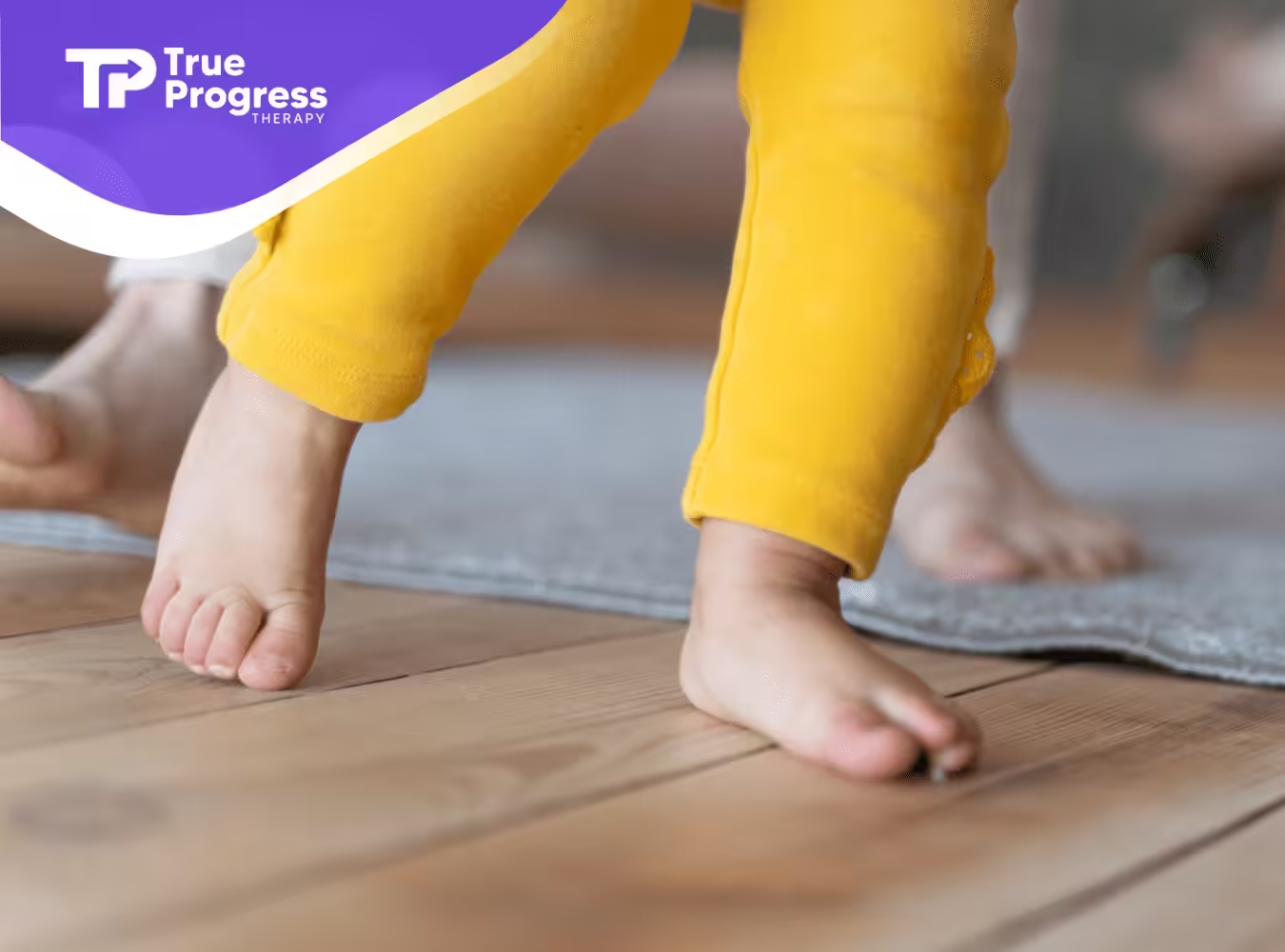
Autism Toe Walking: Causes, Treatment, and Support
Key Highlights Toe walking is more common in children with autism compared to their peers. Causes may include sensory sensitivities, motor development challenges, or habit formation. Persistent toe walking can affect balance, posture, and long-term joint health. Treatment options include physical th
Read article
Turn-Taking in Autism: Building Social Skills with ABA
Key Highlights Turn-taking is a foundational social skill that helps children engage in play, communication, and daily routines. Many autistic children struggle with turn-taking due to communication, sensory, or social challenges. Structured activities, visual supports, and ABA strategies can make t
Read article
Do Autistic Kids Understand Punishment?
Autistic kids may not always understand punishment in the way adults expect. Traditional punishments, like timeouts or loss of privileges, can be confusing if the child does not connect the consequence to the behavior. Why Punishment Often Fails Difficulty with cause and effect: Some children strugg
Read article
What Are Calming Items for Autism? Best Tools to Use
Calming items for autism are tools designed to help children regulate emotions, reduce anxiety, and manage sensory overload. These items provide comfort, focus, and a sense of control in overwhelming environments. Common Calming Items Weighted blankets or lap pads: Provide deep pressure for relaxati
Read article
What is Rett’s Autism? Key Facts Explained
Rett’s autism, more accurately known as Rett syndrome, is a rare neurological disorder that primarily affects girls. It was once thought to be part of autism spectrum disorder (ASD) because of overlapping symptoms, but today it is recognized as a separate condition. Key Features of Rett Syndrome Dev
Read article
Autism Hyperfixation: Understanding and Supporting Special Interests
Key Highlights Hyperfixation in autism often centers around deep interests or activities. Special interests can promote learning, skill-building, and emotional regulation. Challenges may arise if hyperfixation interferes with daily life or flexibility. Families and therapists can harness hyperfixati
Read article
Stereotypes in Autism and ABA: Breaking Myths with Facts
Key Highlights Autism stereotypes often misrepresent the diverse spectrum of abilities. Common misconceptions can limit opportunities for autistic individuals. ABA therapy emphasizes personalized approaches, breaking harmful stereotypes. Families play a key role in shifting perspectives and fosterin
Read article
ABA Therapy and Improved Family Dynamics
Key Highlights ABA therapy provides structured strategies to improve communication and behavior at home. Families experience reduced stress and stronger bonds through consistent support. Parent involvement in ABA therapy enhances long-term progress for children. Techniques can be applied across dail
Read article
Can Autism Make It Hard to Focus?
Yes, autism can make focusing challenging for many children. Difficulties with attention are often linked to sensory sensitivities, routine changes, or differences in processing information. Here’s what can help: Structured Environment: Predictable routines and clear expectations reduce distractions
Read article
Are Autistic People Deep Thinkers?
Many autistic individuals are considered deep thinkers, often processing information in unique and detailed ways. Here’s why: Intense Focus: Autistic people often concentrate deeply on topics of interest, noticing details others might miss. Analytical Thinking: They may approach problems logically a
Read article
What Relaxes Autism? | Tips to Calm Autistic Kids
Finding ways to help autistic children relax is key to reducing stress and promoting well-being. While every child is unique, these strategies often work: Sensory Tools: Weighted blankets, fidget toys, or soft textures can provide comfort and calm. Predictable Routine: A structured schedule helps re
Read articleNo articles match that search.