

Autism and Friendships: Building Social Connections
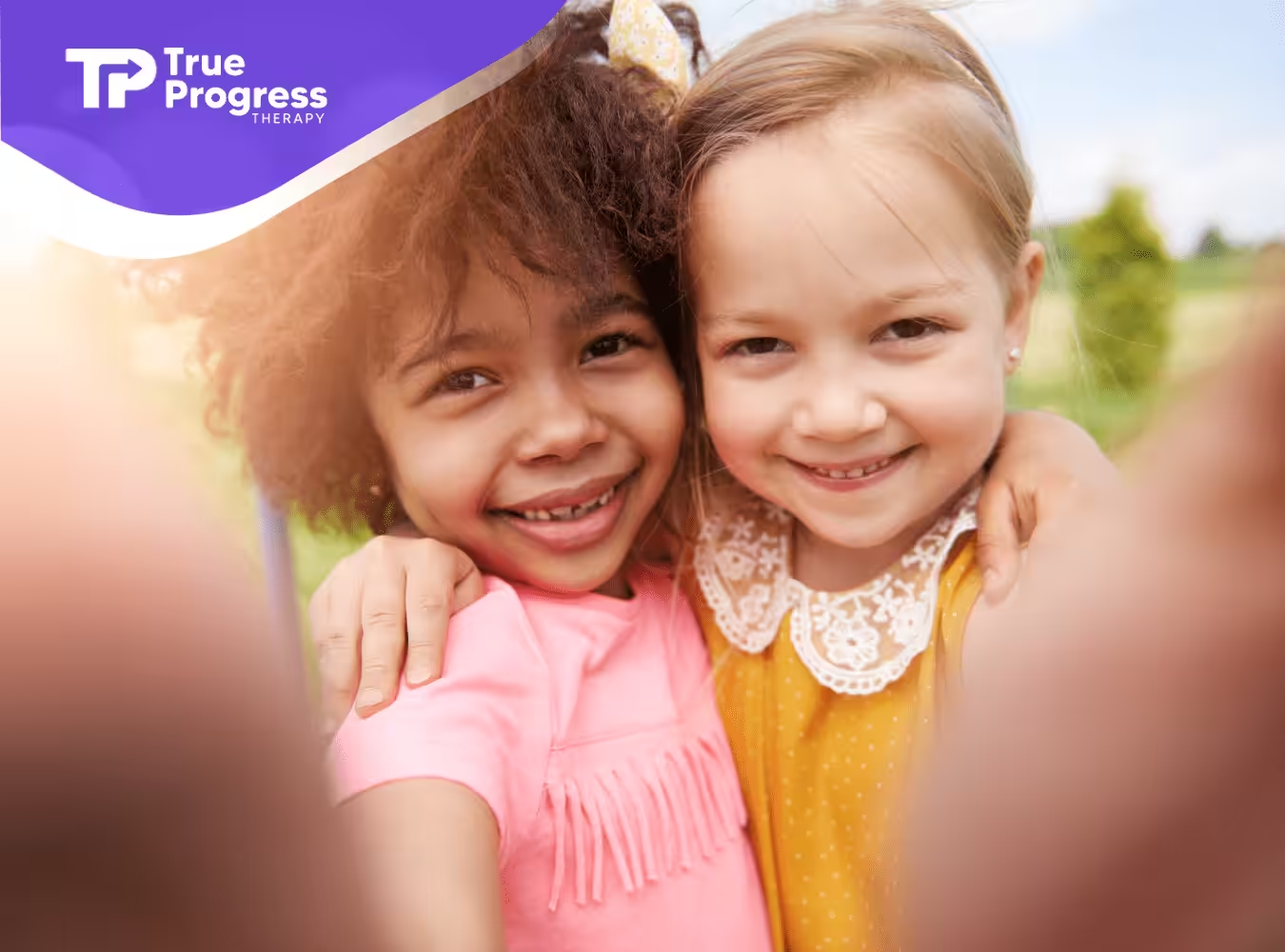
Key Highlights
- Children with autism may face challenges in understanding social cues, communication, and shared interests that impact friendships.
- Friendships are vital for emotional development, self-esteem, and social growth.
- Structured supports, social skills training, and parent guidance can foster positive peer relationships.
- Role-playing, visual supports, and structured playdates are effective strategies.
- Parents, educators, and therapists play a key role in guiding and encouraging healthy friendships.
Friendships are an important part of childhood. They provide opportunities for fun, learning, and emotional growth. For children with autism spectrum disorder (ASD), however, forming and maintaining friendships can sometimes be more challenging.
Differences in social interaction, communication, and play skills can create barriers, but with the right guidance and support, children with autism can form strong, meaningful friendships. This blog explores the connection between autism and friendships, common challenges, and practical ways parents and caregivers can help.
Why Friendships Matter for Children with Autism
Friendships do more than provide companionship—they play a crucial role in development.
Benefits of Friendships
- Emotional Support: Friends can help children manage stress and emotions.
- Social Growth: Peer interactions provide opportunities to practice social skills.
- Confidence and Self-Esteem: Feeling accepted by friends builds self-worth.
- Learning Opportunities: Children learn cooperation, empathy, and problem-solving through play.
For children with autism, these benefits are just as important, even if friendships look a little different from neurotypical relationships.
Understanding Friendship Challenges in Autism
Children with autism may approach friendships differently due to the way they process communication, emotions, and social interactions.
Common Challenges
- Difficulty Reading Social Cues: Struggles with body language, tone of voice, or facial expressions.
- Communication Barriers: Trouble starting or maintaining conversations.
- Different Play Preferences: Interest in routines or specific topics rather than group activities.
- Sensory Sensitivities: Overwhelm in noisy or crowded play settings.
- Literal Thinking: Misunderstanding jokes, sarcasm, or abstract social rules.
Examples of Friendship Differences
Friendship Skill | Possible Challenge | Example |
|---|---|---|
Starting Conversations | Unsure how to begin talking to peers | Standing nearby but not joining play |
Shared Interests | Strong preference for specific topics | Only wanting to talk about trains instead of varied subjects |
Group Play | Struggles with flexibility | Getting upset if rules change in a game |
Emotional Reciprocity | Difficulty recognizing others’ feelings | Not noticing if a friend is upset |
Recognizing these differences helps caregivers and educators provide appropriate supports.
How Parents Can Support Friendships
Parents play an essential role in helping children with autism develop social connections.
1. Teach Social Skills Step by Step
- Use role-playing to practice greetings, turn-taking, and conversation starters.
- Introduce social stories that explain how friendships work.
- Break down social rules into simple, clear steps.
2. Encourage Playdates and Structured Social Time
- Keep playdates short at first, gradually increasing the time.
- Choose activities your child enjoys and feels comfortable with.
- Provide guided support during the playdate, but step back as children become more independent.
3. Foster Shared Interests
- Encourage activities where your child and peers can bond over common interests, such as art, building blocks, or video games.
- Join community groups or clubs that align with your child’s passions.
4. Support Emotional Understanding
- Use emotion charts or visuals to help your child identify feelings.
- Practice recognizing emotions in books, movies, or everyday life.
- Encourage empathy by talking about how actions affect others.
5. Model Friendship Behaviors
- Demonstrate how you greet friends, listen actively, and show kindness.
- Involve your child in family or community social interactions.
Role of Schools and Educators
Teachers and school staff can provide valuable support in fostering friendships.
- Buddy Systems: Pairing children with supportive peers during activities.
- Social Groups: Small group sessions to practice conversation and cooperation.
- Classroom Awareness: Teaching classmates about acceptance and understanding differences.
- Safe Spaces: Allowing quiet areas for breaks during social overwhelm.
Schools that actively promote inclusion and peer understanding create environments where friendships can flourish.
How ABA Therapy Supports Friendships
ABA therapy (Applied Behavior Analysis) provides evidence-based tools to build social and friendship skills.
Key Ways ABA Helps:
- Skill Building: Teaching conversation, sharing, and turn-taking.
- Role-Playing Scenarios: Practicing social interactions in a safe, structured environment.
- Reinforcement: Encouraging positive social behaviors with rewards.
- Generalization: Helping children use friendship skills across home, school, and community.
ABA therapists also coach parents, offering strategies to reinforce social skills at home and during peer interactions.
Practical Strategies for Parents and Caregivers
Here are some effective, easy-to-use strategies to help your child build friendships:
- Use visual cue cards with phrases like “Can I play?” or “Do you want to trade toys?”
- Teach conversation starters related to your child’s interests.
- Encourage games with clear rules (board games, puzzles) to reduce confusion.
- Provide opportunities for parallel play, where children play alongside each other as a step toward interactive play.
- Celebrate small successes, such as making eye contact or sharing a toy.
Building Long-Term Friendship Skills
Friendships take time and practice to develop. Supporting children with autism means focusing on long-term growth.
Tips for Ongoing Development
- Reinforce patience: Friendships may form slowly.
- Encourage resilience: Teach your child how to handle disagreements.
- Provide continued exposure: Join social skills groups or community programs.
- Support independence: Allow your child to practice social choices without constant intervention.
Over time, these small steps lead to greater confidence and more meaningful peer connections.
Final Thoughts
While children with autism may face unique challenges in building friendships, they are just as capable of forming meaningful, supportive relationships. With the right tools—social skills training, structured play opportunities, and family support—friendships can become a rewarding part of their lives.
At True Progress Therapy, we understand the importance of social connections for children with autism. Through individualized ABA therapy, we help children develop the skills they need to build friendships, improve social confidence, and enjoy the benefits of meaningful peer relationships. Contact us today!
Frequently Asked Questions
1. Why do children with autism struggle with friendships?
Children with autism may have difficulty with social cues, communication, flexibility, and sensory sensitivities, which can affect their ability to form friendships.
2. Can children with autism have close friendships?
Yes. While friendships may look different, many children with autism form strong, lasting bonds with peers who share interests and provide understanding.
3. How can parents help their autistic child make friends?
Parents can use role-playing, visual supports, structured playdates, and encouragement of shared interests to support friendship-building.
4. Does ABA therapy help with social skills?
Yes. ABA therapy provides structured, evidence-based strategies for teaching social behaviors, emotional understanding, and peer interaction skills.
5. What types of activities work best for fostering friendships?
Structured games with clear rules, shared-interest activities (like art or building), and smaller group settings are often best for children with autism.
Sources:
- https://www.autismspeaks.org/sensory-issues
- https://pmc.ncbi.nlm.nih.gov/articles/PMC4457285/
- https://www.autismparentingmagazine.com/autism-emotion-chart/
- https://www.autismspeaks.org/tool-kit-excerpt/inclusion-ensuring-access-everyone
- https://pmc.ncbi.nlm.nih.gov/articles/PMC5702301/
Related Posts
Turn-Taking in Autism: Building Social Skills with ABA
Key Highlights Turn-taking is a foundational social skill that helps children engage in play, communication, and daily routines. Many autistic children struggle with turn-taking due to communication, sensory, or social challenges. Structured activities, visual supports, and ABA strategies can make t
Read article
Social Reinforcement Strategies in ABA: Building Motivation, Connection, and Skills
I know how overwhelming ABA concepts can feel at first, especially when you’re trying to support a child you love. But social reinforcement is one of those ideas that instantly makes sense once you see it in action. Let me walk you through how simple, natural interactions like praise and shared joy
Read article
Autistic Masking: The Hidden Struggles Behind Social Interaction
Autistic masking is a process where individuals with autism hide or suppress their natural behaviors in order to fit in socially or avoid negative judgments. Whether consciously or subconsciously, this coping mechanism can have profound emotional and social consequences. Understanding the different
Read article