

Autism Family Services: Empowering Families Every Step
The Role of Family Support
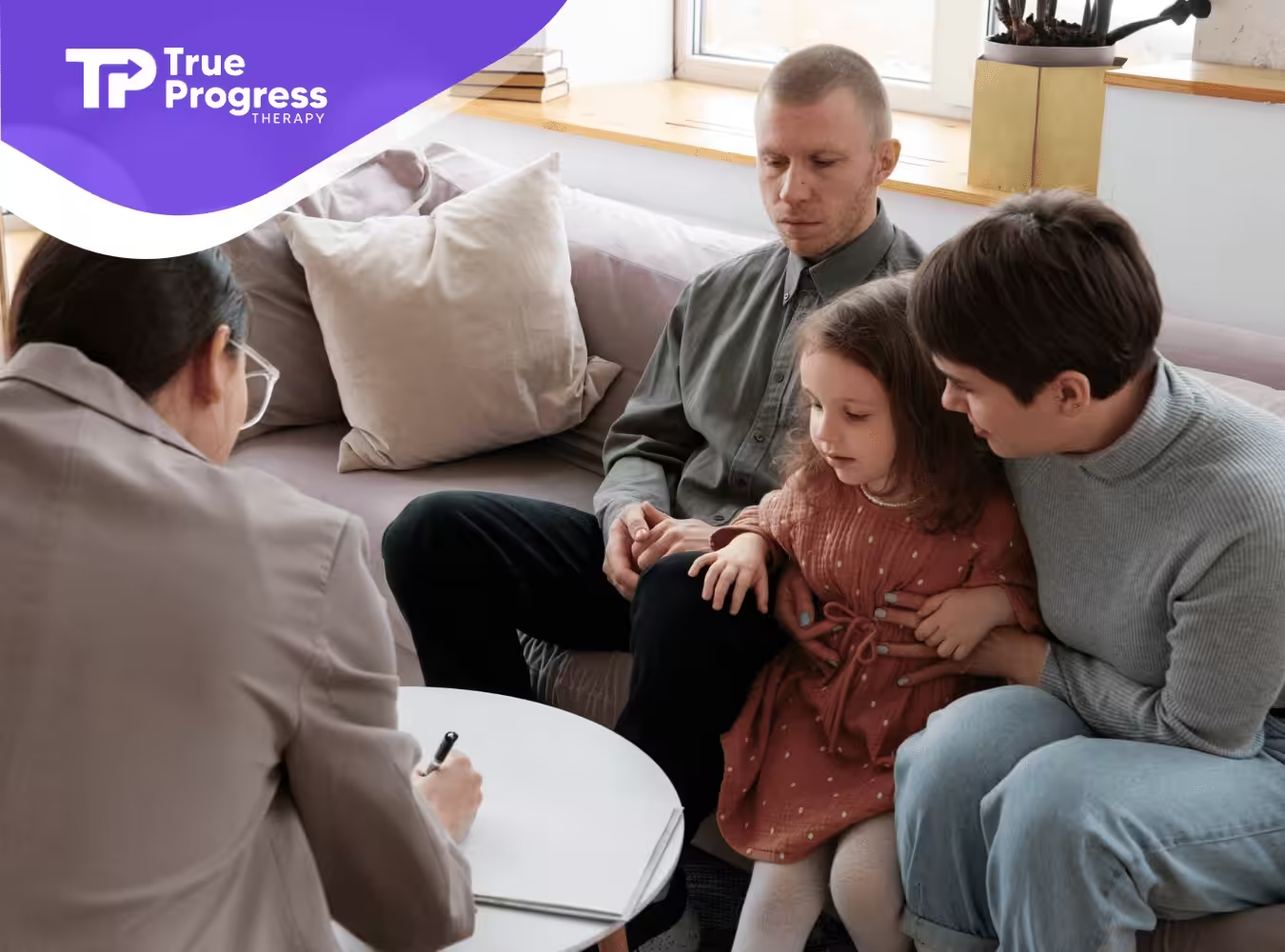
Families play a pivotal role in the care and advancement of individuals with autism spectrum disorder (ASD). Their involvement is crucial for fostering the best outcomes.
Importance of Family Involvement
Active family involvement is foundational to the development and well-being of individuals with ASD. Family members provide valuable insights into the behaviors, preferences, and needs of their loved one. This information is instrumental for professionals to create tailored service plans, optimizing support based on individual needs.
Furthermore, the role of extended family members, like grandparents, is equally important. They can help organize activities, offer emotional backing, and seek additional support networks. This collective effort ensures that parents are better equipped to manage the myriad challenges autism might present.
Family Role | Importance |
|---|---|
Immediate Family | Provides daily care, shares insights about individual needs. |
Extended Family | Offers additional support, helps with activities, seeks external networks. |
Support Groups | Provide information, emotional backing, and shared experiences. |
Impact of Family Support
The reach of family support extends beyond the individual with autism, significantly enhancing the general well-being of the entire family unit. Both immediate and extended families can experience reduced stress levels and improved quality of life. Effective family support programs recognize that each family has unique needs and should be involved in the decision-making processes, crafting comprehensive and holistic support systems.
Family support programs play a crucial role in:
- Improving Outcomes for Individuals with ASD: Personalized service plans guided by family insights often lead to better outcomes. Individuals benefit from a support system that is highly attuned to their specific requirements and strengths.
- Building Coping Skills: Families, particularly parents, develop better coping mechanisms through continuous support, which helps in managing the daily challenges associated with autism.
- Enhancing Quality of Life: A well-supported family is better positioned to ensure a stable, nurturing environment for their loved one with ASD, thereby improving the overall family dynamic.
Support groups for parents of children with autism are highly recommended. These groups offer a shared platform for information, resources, and emotional support, empowering parents who are navigating similar experiences.
For more information on resources and support, visit our page on autism family resources and autism family counseling.
Aspect of Support | Impact |
|---|---|
Individual Outcomes | Better personalization |
Family Well-being | Reduced stress, improved coping |
Quality of Life | Enhanced family dynamics |
By recognizing and leveraging the importance of family involvement and support, the journey with autism can be made more manageable and enriching for all members involved.
Early Intervention Benefits
Enhancing Autonomy through Early Intervention
Early intervention through psycho-educational programs can significantly impact the autonomy achieved by individuals with autism spectrum disorder (ASD). Family involvement is crucial in these programs, providing knowledge about the child’s behaviors, preferences, and needs, leading to better-tailored support strategies.
Early Intervention Programs
Early intervention services focus on developing essential skills in young children with autism, covering areas such as:
- Communication
- Social interaction
- Behavioral skills
The goal is to support the child’s development and enhance their ability to function independently. Autism family resources are available to help families navigate these early intervention services.
Long-Term Positive Effects of Early Intervention
Research indicates that early intervention can lead to long-term positive outcomes for children with autism. Accessing early intervention services can significantly improve future prospects, compared to starting intervention at a later stage in life.
Key Long-Term Benefits
- Improved Cognitive Function: Some studies have shown that early intervention can increase a child’s IQ by an average of 17 points.
- Enhanced Communication Skills: Children receiving early intervention services often show better outcomes in communication.
- Socialization Improvements: Early intervention helps enhance social skills, enabling better interaction with peers and adults.
- Behavioral Advantages: Structured interventions help in managing and improving behavior, leading to better overall functioning.
Aspect | Intervention | No Intervention |
|---|---|---|
IQ Improvement | +17 IQ Points | N/A |
Communication | Improved | Limited |
Socialization | Enhanced | Limited |
Behavioral Skills | Better Managed | Challenges Persist |
By leveraging early intervention services, families can significantly improve the developmental trajectory of children with autism, ensuring better integration and a higher quality of life.
Family Support Services
Support services for families affected by autism are crucial in fostering a supportive and empowering environment. These services provide a range of resources and assistance tailored to meet individual family needs.
Resources and Assistance Offered
Various family support services are available to assist and empower families dealing with autism. Key resources include:
- Educational Resources: Information and training on autism, behavior management, and communication techniques.
- Respite Care: Temporary relief for primary caregivers, allowing them to rest and recharge.
- Counseling and Emotional Support: Professional support for coping with stress and emotional challenges.
- Service Access Assistance: Guidance in navigating and accessing necessary interventions and therapies.
Service Type | Description |
|---|---|
Educational Resources | Training on autism management and communication techniques |
Respite Care | Temporary care services to relieve primary caregivers |
Counseling | Professional support for emotional well-being |
Service Access | Assistance in obtaining necessary interventions |
Tailoring Support for Individual Families
Effective family support services recognize the diversity and unique needs of each family. Collaboration between professionals and family members is emphasized to address specific challenges, strengths, and goals.
- Customized Plans: Programs develop personalized support plans for each family based on their individual circumstances.
- Active Involvement: Families are involved in decision-making processes to ensure their needs and preferences are met.
- Holistic Approaches: Comprehensive support systems are created to cater to all aspects of family life, including social, emotional, and financial needs.
Professionals working within these programs focus on creating holistic support systems that encompass all aspects of family life. This ensures a comprehensive approach to empowering families every step of the way.
Global Perspective on Autism
Autism spectrum disorder (ASD) presents an array of challenges, and understanding it from a global perspective reveals significant disparities and cultural interpretations. These factors significantly affect how autism is perceived, diagnosed, and managed worldwide.
Regional Disparities in Prevalence
The prevalence of autism varies significantly across different regions. Studies have shown distinct discrepancies in autism rates, which can be attributed to a variety of factors such as diagnostic practices, cultural attitudes, and access to healthcare services.
Region | Prevalence (%) |
|---|---|
Asia | 0.4 |
America | 1.0 |
Europe | 0.5 |
Africa | 1.0 |
Australia | 1.7 |
These variations highlight the importance of considering regional differences in prevalence when discussing autism family support services. For instance, the higher prevalence in Australia may be attributed to better diagnostic recognition and more robust support systems.
Recent trends also indicate a global rise in autism prevalence, increasing from 0.6% in 2003 to 1.25% in 2021. This increase reflects advances in diagnostic categories, research methodologies, and heightened awareness.
Challenges in Cultural Interpretations
Cultural beliefs significantly influence the perception and interpretation of autism symptoms. In some cultures, behaviors such as delayed speech might be seen as a sign of wisdom or maturity rather than a developmental concern. This perspective can delay the recognition and intervention necessary for managing autism effectively.
Different explanatory models for autism vary across cultures, affecting how families interpret and respond to an autism diagnosis. These models include:
- Biological Causes: Genetics and environmental factors.
- Medical Causes: Vaccinations and other health-related factors.
- Supernatural Causes: Curses, sins, or punishments from a higher power.
Understanding these cultural interpretations is crucial for tailoring autism family services effectively. For example, mental health literacy and awareness of typical child developmental milestones vary widely among different populations. Limited literacy can hinder early recognition of autism symptoms.
Efforts to provide appropriate autism family counseling need to consider these cultural nuances to ensure that support services are effective and culturally sensitive. By acknowledging and addressing these disparities, we can empower families and improve access to vital resources globally.
Support Programs and Grants
Assistance Programs for Autism Families
For families navigating the challenges of autism, various assistance programs are available to provide essential services and support. These programs aim to alleviate some of the burdens, making it easier for families to access necessary treatments and resources.
1. Autism Care Today
Provides funding for:
- Applied Behavior Analysis Therapy (ABA Therapy)
- Speech and Occupational Therapy
- Bio-medical Testing and Supplements
- Assistive Technologies and Safety Equipment
- Social Skills Groups
- Special Needs Summer Camps Learn more.
2. MyGOAL Grant Award Program
Offers annual grants for individuals under 18 years old with autism, covering treatments, enrichment, and educational needs not funded by other sources.
3. Give A Voice
A program by the National Autism Association providing communication devices to non-verbal or minimally verbal individuals with autism, reducing communication barriers and the risk of harm.
4. Special Angels Foundation
Supports families in obtaining therapies, equipment, and resources based on specific criteria, including the necessity for a medical letter, US citizenship, and quality of life considerations.
5. UHCCF Grants
United Healthcare Children’s Foundation offers financial aid to families with children having medical needs not fully covered by commercial health insurance plans.
Financial Aid and Resource Allocation
Financial aid is critical for families dealing with autism, providing the means to access therapies, technologies, and educational programs that can significantly improve their quality of life. Here are key sources of financial aid and resources:
Programs | Focus Areas | Criteria |
|---|---|---|
Autism Care Today | Comprehensive Therapy Services | Varies by Service |
MyGOAL Grant | Treatments, Enrichment, Education | Under 18 years old with autism |
Give A Voice | Communication Devices | Non-verbal or Minimally Verbal Individuals |
Special Angels Foundation | Therapies, Equipment, Resources | Medical necessity, US citizenship |
UHCCF Grants | Medical Needs | Not fully covered by insurance |
Each of these programs plays a vital role in autism family services, ensuring that families receive the necessary support and resources to manage their unique challenges effectively. By leveraging these resources, families can better navigate the complexities associated with autism and ensure a brighter future for their loved ones.
Self-Care and Advocacy
Importance of Caregiver Well-Being
Caring for children with autism can be demanding, both emotionally and physically. Therefore, caregiver well-being plays a pivotal role in an effective support system for families. Ensuring the emotional and physical health of caregivers is essential not only for their own sake but also for providing the best care possible for their loved ones.
Caregivers often face personal challenges like stress and burnout. Regular self-care activities, including adequate sleep, exercise, and social interactions, can significantly improve their overall well-being. By maintaining their health, caregivers can better manage the daily responsibilities of childcare and navigate the complexities associated with raising a child with autism. For more information on making self-care a priority, check out autism family therapy and autism family counseling.
It is also beneficial for extended family members, such as grandparents, to step in and offer support. They can help organize activities, offer respite, and contribute to the family’s network, making the caregiving journey less strenuous.
Self-Care Activities for Caregivers | Benefits |
|---|---|
Adequate Sleep | Enhances decision-making, patience, and stress management |
Exercise | Improves physical health and reduces stress |
Social Interactions | Reduces feelings of isolation and offers emotional support |
Seeking Professional Help | Provides coping strategies and professional support |
Advocacy and Lifelong Support
Beyond immediate family care, lifelong support and advocacy are paramount for individuals with autism. Organizations like Autism Speaks are dedicated to advocating for comprehensive lifelong supports that enable individuals with autism to live safely and remain active participants in their communities.
These supports include but are not limited to:
- Residential and day supports
- Respite care
- Recreational activities
- Transportation services
- Home-based services
- Financial planning resources
The role of advocacy extends beyond securing resources; it involves combating stigmatization and changing societal perceptions about autism. Parents and caregivers often encounter negative reactions and stigma, which can have lasting impacts on the entire family. Advocacy helps to address these societal issues, promoting a more inclusive environment for individuals with autism and their families.
Active involvement in support groups and communities can also play a crucial role in advocacy. Participating in or forming autism family support groups allows families to share resources, experiences, and provide mutual support.
Final Thoughts
In conclusion, family support stands as the cornerstone of meaningful progress for individuals with autism. From early intervention and educational resources to emotional support and advocacy, families play an essential role in shaping positive outcomes. By actively participating and accessing available services, families can create nurturing environments that promote independence and well-being.
At True Progress Therapy, we understand the power of family involvement and are here to walk beside you on every step of your journey. Contact us today to learn how our personalized ABA therapy services can support your loved one and empower your family.
Sources:
- https://www.autismspeaks.org/autism-and-your-family
- https://pmc.ncbi.nlm.nih.gov/articles/PMC7614360/
- https://www.autismspeaks.org/autism-grants-families
- https://www.autismspeaks.org/autism-support-family-help
- https://www.uhccf.org/apply-for-a-grant/
Related Posts

Empowering Better Living: Top Autism Family Resources
Accessing Autism Support Finding the right support resources for families with autistic members is vital. Below, explore both national and regional services that can assist in various aspects of living and thriving with autism. National Support Organizations National support organizations play a sig
Read article
ABA Therapy Services in NJ: What Every Parent Should Know
Insurance Coverage for ABA Therapy in New Jersey Figuring out insurance for ABA therapy can feel like trying to solve a jigsaw with missing pieces. But if you’re in New Jersey, NJ FamilyCare Medicaid is here to help those seeking ABA therapy for Autism Spectrum Disorder (ASD). NJ FamilyCare Medicaid
Read article
What Is the Divorce Rate for Families with Autism?
Key Highlights Divorce is a challenging topic for many families, but it can be especially complex for those raising children with autism. As we delve into the statistics surrounding divorce rates in families with autistic children, we aim to shed light on both the unique challenges these families fa
Read article