

Autism Special Interests List: Why They Matter and How to Support Them
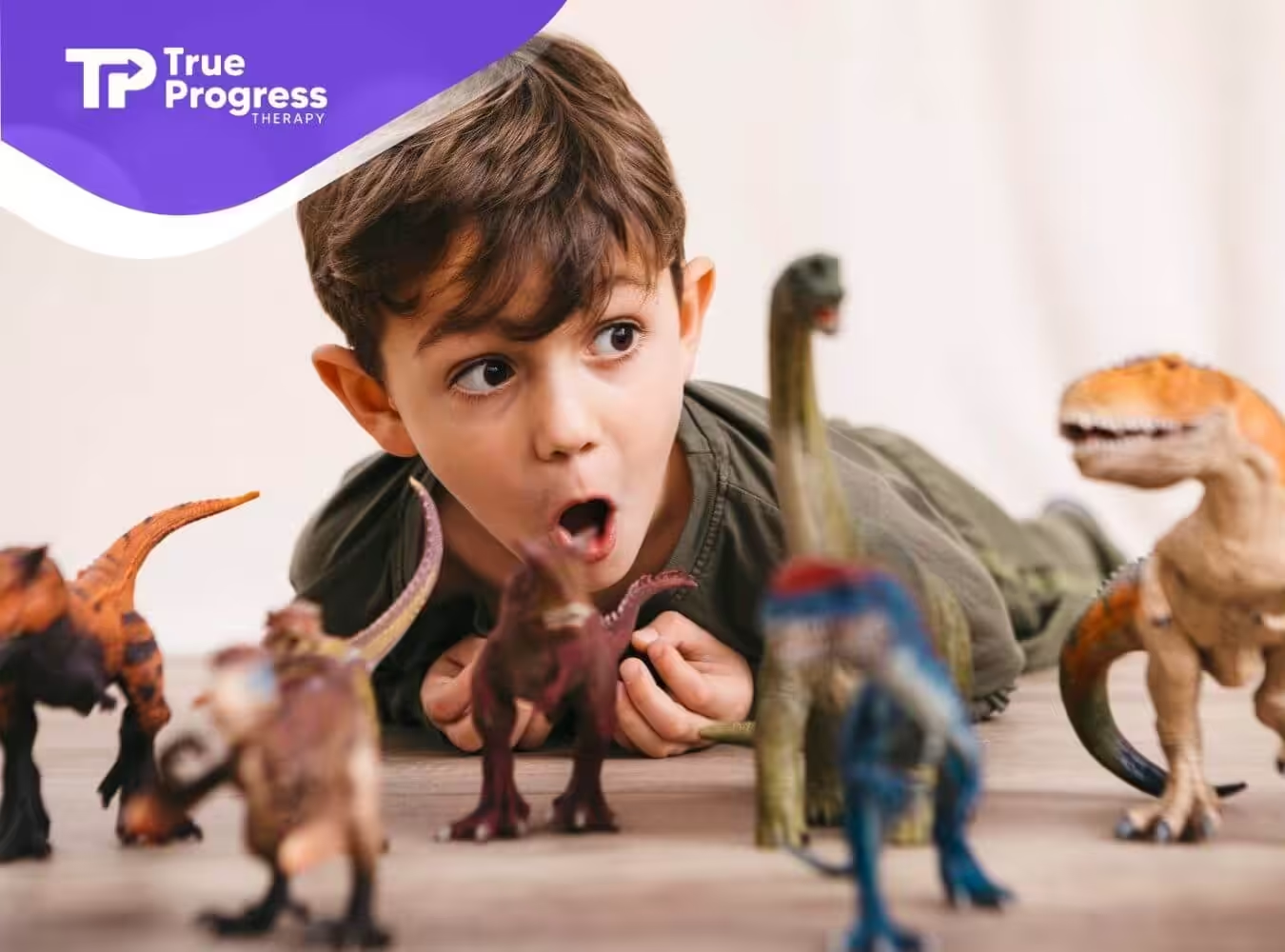
Every child with autism is wonderfully unique — and so are their interests. Some special interests are typical childhood fascinations taken to a deeper level, while others are incredibly specific or unusual.
Here’s a more detailed list of common “autism obsessions” or special interests that many parents notice:
Transportation & Machines
Many autistic children are fascinated by how things move or work.
- Trains (especially Thomas the Tank Engine!)
- Cars, trucks, or buses
- Airplanes and airports
- Elevators and escalators
- Vacuum cleaners
- Washing machines or dryers
- Fans, lights, or ceiling fans
- Construction equipment (cranes, diggers, bulldozers)
Animals & Nature
Some children develop deep knowledge about animals or the natural world.
- Dinosaurs
- Ocean animals (sharks, dolphins, whales)
- Specific animals (like cats, dogs, or horses)
- Insects or reptiles
- Weather patterns (storms, tornadoes, hurricanes)
- Rocks, fossils, or outer space
Patterns, Numbers & Systems
Many autistic children are drawn to things that are logical, predictable, or repetitive.
- Numbers and math
- Calendars and dates
- Maps or GPS systems
- Clocks and time
- Building structures or puzzles
- Collecting objects (rocks, bottle caps, toy cars, etc.)
Technology & Media
Some autistic kids love technology and visual media because of the structure and repetition.
- Computers, tablets, or phones
- Video games (especially ones with clear rules or patterns)
- Specific TV shows, movies, or characters
- YouTube videos (often watched repeatedly)
- Coding or robotics
Arts, Music & Creativity
For some children, creativity becomes their special world of focus and joy.
- Music or instruments
- Drawing or painting a favorite theme repeatedly
- Acting out movie scenes
- Singing specific songs over and over
- Animation or cartoon characters
Everyday Objects & Routines
Sometimes, everyday things can become special interests too.
- Keys, doors, or locks
- Cleaning supplies or routines
- Household appliances
- Schedules or daily routines
- Organizing or sorting objects by color, size, or shape
Knowledge & Learning Topics
Older children (and even adults) often channel their special interests into learning.
- History or geography
- Science experiments
- Languages or word origins
- Medical facts or anatomy
- Specific eras (like ancient Egypt or the solar system)
How to Support These Interests
Special interests in autism are not something to “fix.” They can be incredible tools for growth. Try to:
- Use them as motivators (e.g., earning “train time” after completing a task).
- Integrate them into learning activities (counting with dinosaurs, reading about space).
- Encourage social sharing, helping your child talk about their interests with others.
- Balance the interest with other activities to prevent overstimulation or frustration.
At True Progress Therapy, we see every special interest as a strength. Through in-home ABA therapy and ABA parent training across New Jersey, we help families understand and use these passions to build communication, social skills, and confidence — right at home.
Reach out to True Progress Therapy today to discover how we can help your child thrive through their unique interests.
FAQs
Are autism obsessions the same as special interests?
They’re very similar — both describe intense focus on specific topics, though “special interests” is the more positive term.
Can special interests change over time?
Yes! Many children move from one strong interest to another as they grow and develop.
What if my child’s obsession takes over their day?
Gently set boundaries and use their interest as a motivator for other tasks. A BCBA can help create balance.
Sources:
- https://www.autism.org.uk/advice-and-guidance/topics/about-autism/focused-and-dedicated-interests
- https://www.autismspeaks.org/science-news/special-interest-autism
- https://pmc.ncbi.nlm.nih.gov/articles/PMC6127767/
- https://www.simplypsychology.org/autistic-special-interests-vs-adhd-hyperfixations.html
- https://www.leicspart.nhs.uk/autism-space/health-and-lifestyle/hobbies-and-interests-for-autistic-people/
- https://www.psychologytoday.com/us/blog/atypical-children-extraordinary-parenting/202302/de-pathologizing-the-intense-special
Related Posts
Support and Understanding: Autism Family Support Groups Matter
Understanding Autism Support Recognizing the importance of support and intervention strategies is crucial for those navigating the complexities of Autism Spectrum Disorder (ASD). In this section, we will delve into the two principal approaches for supporting individuals with ASD: behavioral and deve
Read article
Autism Hyperfixation: Understanding and Supporting Special Interests
Key Highlights Hyperfixation in autism often centers around deep interests or activities. Special interests can promote learning, skill-building, and emotional regulation. Challenges may arise if hyperfixation interferes with daily life or flexibility. Families and therapists can harness hyperfixati
Read article
Autism Support by State: Why New Jersey Stands Out
Finding the right resources for your child with autism can feel like searching for a needle in a haystack. With autism benefits varying widely by state, it’s easy to feel overwhelmed. But here’s the good news: New Jersey is a national leader in autism support. From early intervention services to ins
Read article