

Do Babies With Autism Smile? Insights for Parents
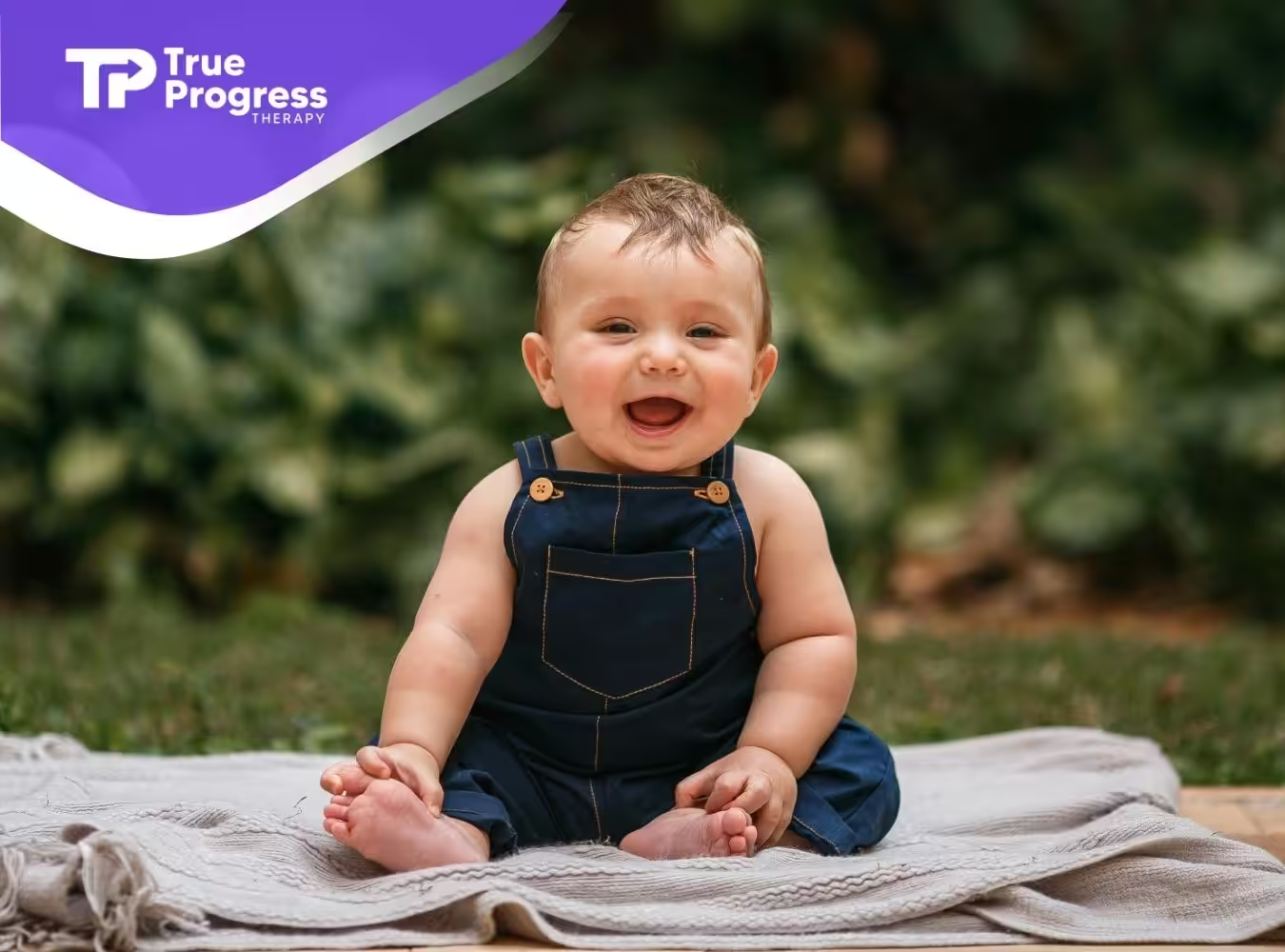
Do babies with autism smile? A baby’s first smile is a milestone that parents eagerly await. It’s a powerful sign of connection and an early form of communication. But what if your baby’s smiling behaviors seem different? For parents wondering about infant development and potential signs of autism spectrum disorder, questions about smiling are common. This article explores whether babies with autism smile, what those smiles might look like, and how you can support your child’s unique social and emotional journey.
Understanding Autism Spectrum Disorder (ASD) in Babies
When you have concerns about your baby’s development, understanding the basics of autism spectrum disorder is a helpful first step. The early signs of autism can be subtle, and knowing what to look for allows for early detection, which is key to providing the right support.
This section will cover what ASD is, some of the early developmental behaviors to be aware of, and why a simple act like smiling is so significant in a baby’s growth.
What Is Autism Spectrum Disorder?
Autism, or autism spectrum disorder (ASD), is a neurodevelopmental condition that affects how a person communicates, interacts with others, and experiences the world. The term “spectrum disorder” is used because the symptoms of autism and their severity vary widely among individuals. No two young children with autism are exactly alike.
An autism diagnosis is typically made in early childhood, often around age two or three, when developmental differences become more apparent. These differences can include challenges with social skills, communication, and the presence of repetitive behaviors.
For babies, the signs can be very subtle. A diagnosis is made by a qualified healthcare professional who can assess a range of behaviors and developmental milestones to understand your child’s unique profile.
Early Developmental Signs and Behaviors
Observing your baby’s development is a natural part of parenting. While every child develops at their own pace, certain early signs may point toward developmental delays that are sometimes associated with autism. These can include differences in how your baby interacts with you and their environment.
These signs often involve social communication and behavior. For example, you might notice differences in your baby’s language development or how they respond to social cues.
Some early behaviors to watch for include:
- Difficulties with eye contact or joint attention.
- The presence of repetitive behaviors, such as hand-flapping or spinning.
- A delayed response, or lack of response, to their name or familiar voices.
Why Smiling Matters in Infant Development
A baby’s smile is more than just a cute facial expression; it is a fundamental part of infant development. The social smile, which is a smile directed at another person, is a powerful tool for bonding and communication. It marks a significant step in a baby’s ability to engage with the world around them.
When a baby offers a social smile, they are participating in a back-and-forth exchange. This early form of social behavior helps build a secure attachment with caregivers. It is also a building block for more complex social skills, such as joint attention, where a baby learns to share focus on an object or event with another person.
Smiling helps babies express positive emotions and learn to read the facial expressions of others. This reciprocal interaction fosters trust and lays the foundation for language development and emotional well-being.
Typical Smiling Patterns in Infants
To understand how smiling might differ in babies with autism, it helps to know what typical development looks like. Babies’ smiling behaviors evolve significantly in their first few months of age, moving from involuntary reflexes to intentional social smiling.
This progression is a key indicator of social and emotional growth. Let’s look at the milestones for social smiling, what influences these behaviors, and how to tell different types of smiles apart.
Milestones for Social Smiling
During the first year of life, a baby’s smiling patterns change dramatically. The earliest smiles, seen in the first few weeks, are often “reflex smiles.” These are involuntary and can happen when the baby is sleeping or drowsy, not in response to social interaction.
The real magic happens a bit later. The milestone of social smiling typically occurs between two and four months of age. This is when your baby will start smiling directly at you in response to your voice or face. This marks a turning point in their development of social skills.
Here is a general timeline for smiling milestones:
Age | Type of Smile | Description |
|---|---|---|
Birth to 6 weeks | Reflex Smile | Appears random, often during sleep; not a response to you. |
6 weeks to 4 months | Social Smile Emerges | Begins smiling intentionally in response to faces and voices. |
4 to 6 months | Responsive Smiling | Smiles become more frequent and responsive to social games. |
Influences on When and How Babies Smile
A baby’s smile is not just an automatic response; it’s heavily influenced by their interactions and environment. The biggest factor is social engagement with caregivers. When you smile, talk, and make playful facial expressions, you are teaching your baby important social cues and encouraging them to smile back.
Early development is a dance of reciprocity. Your baby learns that their smile gets a positive reaction from you, which makes them want to smile more. This creates a positive feedback loop that strengthens your bond and builds their social confidence.
Different social situations can also affect smiling. A baby might smile more readily with a familiar, loving caregiver than with a stranger. They are constantly learning to read social cues, and a safe, engaging environment makes them more likely to express their happiness through a smile.
Distinguishing Social Smiles from Reflex Smiles
How can you tell if that adorable grin is a true social smile or just a reflex? The key difference lies in the context and timing. Reflex smiles are fleeting and often occur when a baby is sleepy or has gas. They are not directed at anyone and happen without any social interaction.
A social smile, on the other hand, is all about connection. It is a direct response to you. Your baby will make eye contact and their whole face will light up. The smile is intentional and meant to engage you in a moment of shared joy.
Observing your baby’s smiling patterns will help you see the shift. When your baby starts looking at you and smiling because you made a funny face or sang a song, you are witnessing the beginning of a beautiful social conversation.
Smiling in Babies with Autism
Now, let’s turn to the central question: what do the smiling behaviors of babies who may be on the autism spectrum look like? While babies with autism do smile, they may show atypical smiling patterns that differ from their neurotypical peers.
These differences can be one of the early signs of autism. Understanding them can help you better interpret your baby’s unique communication style. We will explore how these smiles might look different, their frequency, and how to recognize subtle smiling cues.
Do Babies with Autism Smile Differently?
Research suggests that babies with autism can and do smile, but the quality and context of the “autism smile” may be different. These atypical smiling patterns are often related to the challenges in social communication that are characteristic of autism. For example, a smile might seem less spontaneous or be shorter in duration.
A key difference is often seen in response to social cues. A typically developing baby might smile broadly when a parent plays peek-a-boo, but a baby with autism may not respond with a smile in the same situation. Their smiles might not always align with the social context.
It is also common for smiles to be less frequently directed at other people. Instead, a baby with autism might smile more in response to a favorite object or a sensory experience rather than a social interaction, making it harder for caregivers to interpret their expressions.
Frequency and Timing of Smiles Among Babies with Autism
One of the most noted differences in smiling patterns is a delay in onset. While neurotypical babies often start social smiling by four months of age, babies later diagnosed with a spectrum disorder may show developmental delays in reaching this milestone. They may start smiling socially later or smile much less frequently.
This reduced frequency is often tied to challenges with social engagement. Because social interaction can be less motivating or even overwhelming for them, they may have fewer opportunities to practice and use social smiles.
Furthermore, the smiles they do show may be “non-social.” This means the smile isn’t a response to another person but is instead prompted by something internal, like a self-stimulatory behavior. This can be confusing for parents who are trying to connect with their baby through shared smiles.
Recognizing Subtle Smiling Cues in Autism
Because the smiling behaviors of a baby with autism can be different, it’s helpful to learn to recognize more subtle social cues. Their expressions of joy might not always look like a typical, wide grin. Improving your ability to spot these early signs can strengthen your communication skills with your child.
Look for fleeting moments of connection. A smile might be very brief or not accompanied by direct eye contact. Your baby might show happiness through their facial expressions in ways that are unique to them.
Here are a few subtle cues to watch for:
- A slight upturn of the corners of the mouth during a favorite sensory activity.
- A soft smile that appears when they hear a familiar, comforting sound.
- Brief smiles that occur during non-social play, indicating contentment.
Other Social Communication Signs to Observe
Smiling is just one piece of the puzzle. To get a fuller picture of your baby’s communication development, it’s important to observe other aspects of their social communication. Atypical smiling is rarely the only sign, and a diagnosis is based on a pattern of behaviors.
Paying attention to these other forms of early communication can help you understand your baby’s needs and determine if early intervention might be beneficial. Let’s look at eye contact, gestures, and how your baby responds to you.
Eye Contact and Gestures in Infancy
Eye contact and gestures are cornerstones of early social skills. For typically developing infants, making eye contact is a primary way to connect with caregivers. However, limited eye contact is a common early sign in babies who may be on the autism spectrum. They might avoid looking at faces or make only brief, fleeting eye contact.
Gestures, such as pointing, waving, and reaching, are also crucial for social interaction. Around their first birthday, babies typically start pointing to show you things they find interesting. A lack of these gestures can be an indicator of a delay in communication development.
These nonverbal skills are how babies share their world with you before they have words. Difficulties in these areas can impact their ability to engage in the back-and-forth of social interaction and learn from their environment.
Responding to Parent Voices and Faces
A key part of parent-child interaction is how your baby responds to you. Typically, infants are very interested in human faces and voices, especially those of their caregivers. They will turn their heads toward a familiar voice and study faces intently, which is crucial for social engagement and developing language skills.
Some early signs of autism can include a reduced or delayed response to these social cues. For example, a baby might not consistently turn when their name is called or may seem uninterested in the playful facial expressions you make.
This behavior relates to joint attention, the shared focus between two people. When a baby doesn’t naturally tune into their parents’ faces and voices, it can create challenges in building early communication and bonding.
Playfulness, Engagement, and Emotional Expression
It’s a common misconception that children with autism don’t experience or express joy. Babies with autism absolutely feel happiness and playfulness, but they may show it in their own way. Their emotional expression might not always include a traditional smile or other typical social behaviors.
Instead of smiling during a social game, a baby with autism might show their excitement by flapping their hands, making happy vocalizations, or intensely focusing on a favorite toy. This engagement, though different, is just as valid.
Learning your baby’s unique signals for happiness is key. Are their eyes bright? Do they laugh or coo during a sensory activity like swinging or splashing in water? Recognizing and responding to these individual expressions of joy will help you build a strong connection and support their emotional development.
Factors That May Affect Smiling in Autistic Babies
Understanding why a baby with autism spectrum disorder might have different smiling behaviors is important. It’s often not about a lack of happiness but about underlying factors that influence their ability to engage in social interaction.
Several elements can affect smiling, from sensory sensitivities to challenges with social reciprocity. We’ll explore how overstimulation, difficulties with social back-and-forth, and individual differences play a role.
Sensory Sensitivities and Overstimulation
Many individuals with an autism diagnosis experience sensory sensitivities. This means they can be either over-sensitive (hypersensitive) or under-sensitive (hyposensitive) to things like light, sound, touch, and movement. For a baby, these sensitivities can make everyday social situations feel overwhelming.
If a baby is feeling overstimulated by a noisy room or bright lights, their natural response is to withdraw, not to engage with a smile. The discomfort they feel can make it difficult to process social cues and respond positively, directly impacting their quality of life in that moment.
Sensory sensitivities can make a baby less likely to smile because:
- A gentle touch might feel unpleasant.
- A parent’s happy, loud voice might sound jarring.
- The visual complexity of a smiling face can be too much to process.
Challenges in Social Reciprocity and Interaction
Social reciprocity—the back-and-forth flow of social interaction—is a core challenge for many on the autism spectrum. This skill is what guides us to smile back when someone smiles at us. For a baby with a spectrum disorder, this natural exchange can be difficult to navigate.
They may not instinctively understand that a smile is an invitation to interact or that they are expected to respond in kind. This can affect their communication development, as these early interactions are the foundation for more complex social skills.
This difficulty is not a choice or a sign of being unfriendly. It’s a difference in brain wiring that makes the unwritten rules of social interaction less intuitive. As a result, they may not initiate or reciprocate smiles in the way neurotypical babies do.
Individual Differences Among Children with Autism
It’s crucial to remember that autism is a spectrum, and there are vast individual differences among young children with the diagnosis. Not all children with autism will show the same atypical smiling patterns. Some may smile frequently and socially, while others may smile very rarely.
These variations underscore why an autism diagnosis is never based on a single trait. One child might struggle with smiling but make good eye contact, while another might do the opposite. Each child has a unique combination of strengths and challenges.
Understanding your child as an individual is the most important step toward effective communication. Their smiling patterns are just one part of their personality and developmental profile. Embracing their unique way of being will help you connect with them on their terms.
Supporting Your Baby’s Social Development
If you have concerns about your baby’s social development, the good news is there is so much you can do to help. Creating strong social connections is possible, and early intervention can make a significant difference.
With the right strategies and support, you can encourage your baby’s social growth and build a joyful bond. The following sections offer practical advice on how to encourage smiling, engage in responsive play, and know when to seek professional guidance.
Strategies to Encourage Smiling and Social Connection
Encouraging smiling behaviors and social engagement in your baby is all about creating positive, enjoyable interactions. The goal is to build strong connections by meeting your baby where they are. One powerful tool is positive reinforcement; when your baby does smile or make eye contact, respond with warmth and gentle praise.
Many early intervention programs focus on building these skills through play. Find what your baby genuinely enjoys, whether it’s a sensory activity or a quiet song, and join them in that activity. Your shared enjoyment is the foundation for social connection.
Here are a few strategies to try:
- Engage in sensory play using textures or sounds your baby loves to create a happy, low-pressure environment.
- Use simple, repetitive games like gentle tickles or peek-a-boo, and watch for your baby’s unique cues of enjoyment.
- Get face-to-face during quiet moments and offer a soft, warm smile without expecting one in return.
Engaging in Play and Responsive Parenting
Play is a child’s natural language, and it’s one of the best ways to build social skills. For a baby with autism, play might look different, but it’s just as important. Engaging in your baby’s preferred activities shows them that you value their interests and helps foster their communication skills.
Responsive parenting is key. This means paying close attention to your baby’s cues—even the subtle ones—and responding in a way that is sensitive and supportive. If your baby turns away, respect their need for a break. If they show playfulness through hand-flapping, mirror their excitement with a happy tone of voice.
This approach builds trust and shows your baby that you are a safe, predictable partner in their world. This security can make them more open to social interaction over time. Support groups can also be a great resource for learning more responsive techniques from other parents.
When to Seek Guidance from Healthcare Professionals
If you have ongoing concerns about your baby’s smiling behaviors or overall social development, it’s always best to seek professional guidance. Trust your instincts as a parent. Your pediatrician is a great first point of contact. They can discuss your concerns and refer you to a specialist for a developmental screening.
An early diagnosis can open the door to early intervention services that can make a world of difference. These services are designed to support your child’s unique needs and help them build crucial skills.
Professionals may recommend therapies such as ABA therapy, which uses positive reinforcement to teach new skills, or occupational therapy to help with sensory issues. Getting this support early is the best way to help your child reach their full potential.
Conclusion
In summary, understanding how babies with autism express themselves, particularly through smiling, is crucial for parents navigating this journey. While typical smiling patterns may show variations in frequency and timing among autistic infants, recognizing the unique ways your baby communicates can foster connection and development. By employing strategies that encourage social engagement, you can create a supportive environment conducive to your child’s growth. Remember, each child is different, and observing their individual cues will guide you in nurturing their social skills.
At True Progress Therapy ABA, we believe every milestone, including a smile, reflects growth and connection. Our compassionate therapists in New Jersey work closely with families to understand early signs of autism and support emotional development through personalized ABA therapy. With gentle guidance and proven strategies, we help children build joyful, genuine expressions of communication. Contact True Progress Therapy ABA today to start nurturing your child’s growth with care and confidence.
Frequently Asked Questions
Can a lack of smiling alone indicate autism?
No, a lack of smiling by itself cannot confirm an autism diagnosis. Atypical smiling behaviors are just one of many potential early signs of autism. A diagnosis requires a comprehensive evaluation that looks at a pattern of challenges in social communication and behavior. Early intervention is based on multiple factors.
Will my baby with autism develop more social smiles over time?
It is very possible. With early intervention and therapies focused on building social skills, many children with autism spectrum disorder learn to use social smiles more frequently as they grow. Progress varies for each child, but supporting their development can lead to more responsive smiling behaviors over time.
How can parents help their baby with autism express joy?
You can help by learning your baby’s unique cues for happiness and responding with positive reinforcement. Engage in activities they love, create a supportive environment, and celebrate their communication skills, whatever they may be. Early intervention and connecting with support groups can provide more strategies for social development.
Sources:
- American Psychiatric Association – Understand Stimming Repetitive Behaviors Purpose
- National Library of Medicine – PMC7615265
- reframingautism.org.au – Understanding Autistic Differences In Eye Contact
- raisingchildren.net.au – Early Signs Of Asd
- reframingautism.org.au – Autism And Emotions How And Why Do Autistic People Process Emotions Differently
- verywellmind.com – Highly Sensitive Persons Traits That Create More Stress 4126393
- webmd.com – What Is Hyposensitivity
- drlauramraz.com – Social Reciprocity
Related Posts
Understanding Autistic Love Languages: A Guide for Parents
Understanding Autistic Love Languages When it comes to expressing love, everyone has their unique way of showing affection. For autistic individuals, these ways of expressing love can sometimes differ from traditional or more widely recognized love languages. Understanding and appreciating these dif
Read article
Autism Statistics 2025 New Jersey: Trends and Insights
Autism spectrum disorder (ASD) is becoming a bigger concern in New Jersey and all over the United States. By 2025, the number of people with autism in New Jersey is still quite high. This shows that we need better support and resources for individuals and families dealing with ASD. This article will
Read article
Inflammation and Autism: Key Insights Revealed
Updated: June 5, 2026 If you have been reading about autism online, you may have come across the idea that inflammation plays a role in how the brain develops. It is an area scientists are studying closely, and the headlines can sound either alarming or full of promise depending on where you look. F
Read article