

How Does Music Help Autistic Children?
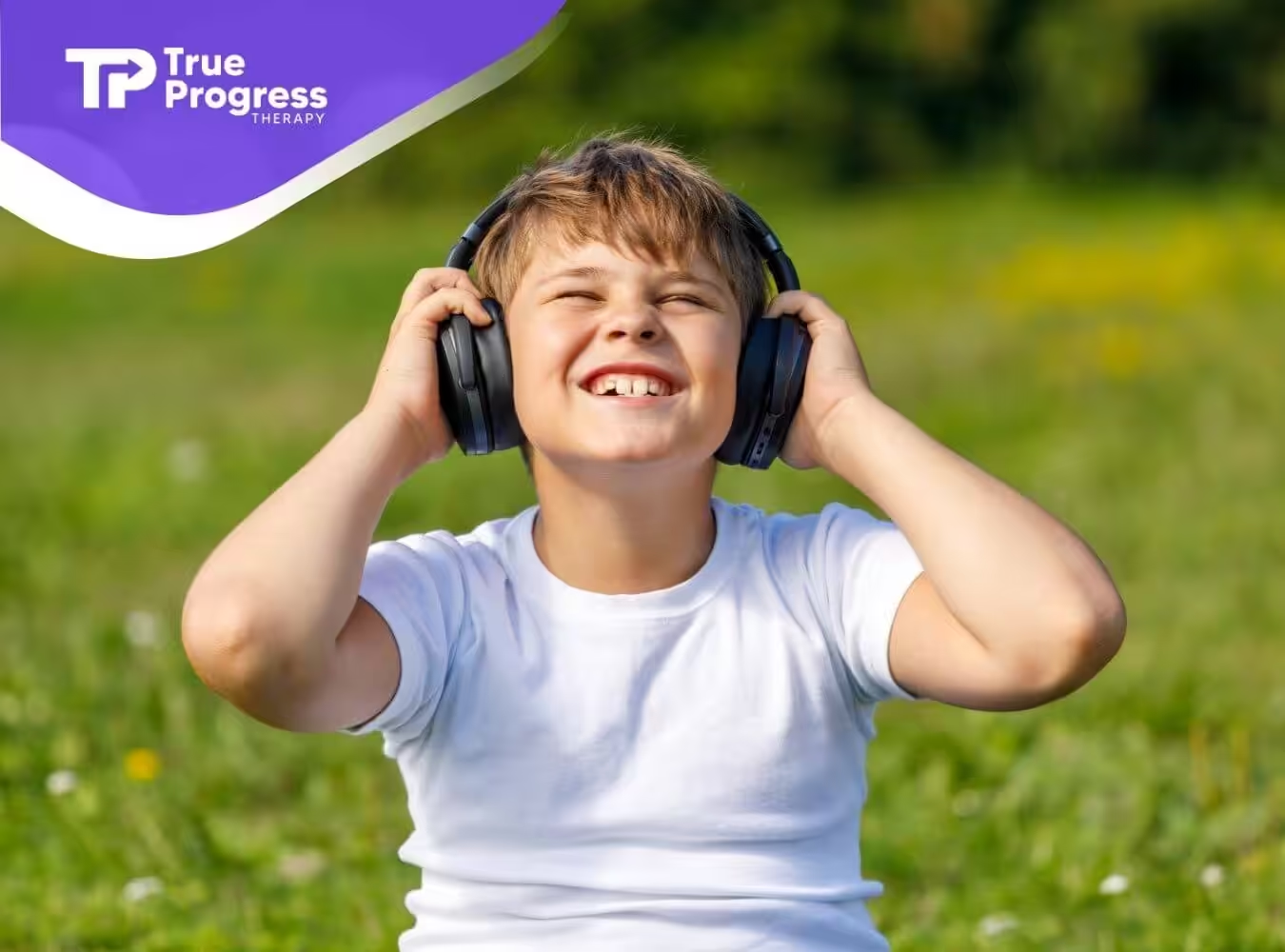
Music has a special way of reaching children on the autism spectrum. It can calm, motivate, and help them connect in ways that feel safe and natural. Many parents notice that music becomes a bridge—helping their child communicate, express emotions, and enjoy shared moments.
Why Music Makes a Difference
Music is predictable, rhythmic, and emotionally expressive. For autistic children, this combination can feel grounding and enjoyable. It gives them a gentle way to interact with the world without pressure or overwhelming sensory input.
Encourages Communication
Melody and rhythm can support speech development. Some children respond to songs before spoken words because music feels less demanding. Singing simple phrases can help build vocabulary, attention, and imitation skills.
Supports Emotional Regulation
Music can help children manage big feelings. Slow, steady rhythms may calm anxiety, while upbeat songs can boost motivation and focus. Many families use music as part of daily routines to make transitions easier.
Helps With Social Skills
Music-based activities—like dancing, clapping, or playing instruments—create opportunities for turn-taking and shared enjoyment. These moments help strengthen social connection in a fun and low-pressure way.
Boosts Sensory Integration
For children with sensory sensitivities, musical patterns help organize sensory input. Consistent rhythms can improve body awareness, motor planning, and coordination.
Music isn’t just entertainment—it can be a powerful tool for growth, connection, and emotional support. If you’re looking for more personalized help for your child, True Progress Therapy offers compassionate and effective ABA services in New Jersey, including in-home ABA and parent training.
Ready to support your child’s progress? Reach out today!
FAQs
Is music therapy good for autistic children?
Yes. Many autistic children respond well to music therapy because it supports communication, emotional regulation, and social engagement in a gentle, enjoyable way.
Do you need special equipment to use music at home?
Not at all. Simple tools like songs, clapping, humming, or basic instruments are enough to make music helpful and fun.
How often should music activities be used?
Short, consistent sessions work best. Even 5–10 minutes a day can make a meaningful difference when done regularly.
Sources:
- https://link.springer.com/article/10.1007/s12144-025-07449-z
- https://www.frontiersin.org/journals/psychology/articles/10.3389/fpsyg.2025.1542662/full
- https://www.sciencedirect.com/science/article/pii/S0891422225000265
- https://journals.sagepub.com/doi/10.1177/13623613241233804
- https://www.nature.com/articles/s41398-018-0287-3
Related Posts
Top-Rated Music Lessons for Autistic Children in NJ
Finding the right music lessons for autistic kids in New Jersey can open up a world of creativity, expression, and joy for your child. Music has the unique ability to connect and inspire, making it a powerful tool for children on the autism spectrum to develop communication, social skills, and emoti
Read article
Do Supplements Help Autism? What the Research Shows
Updated: June 26, 2026 If your child was recently diagnosed with autism, the supplement advice probably started almost right away. Relatives, parent forums, and slick websites all have something to suggest, and one name comes up a lot: sulforaphane, a compound pulled from broccoli sprouts. So the qu
Read article
Early Signs Your Toddler Needs Autism Support: Getting Help Fast
Early Intervention for Autism is essential for children diagnosed with autism spectrum disorder (ASD), as it plays a crucial role in enhancing communication, social skills, and overall well-being. This blog explores how early intervention can positively impact children with ASD by emphasizing the im
Read article