

IEP for Autism Explained — A Practical Guide for Parents and Educators
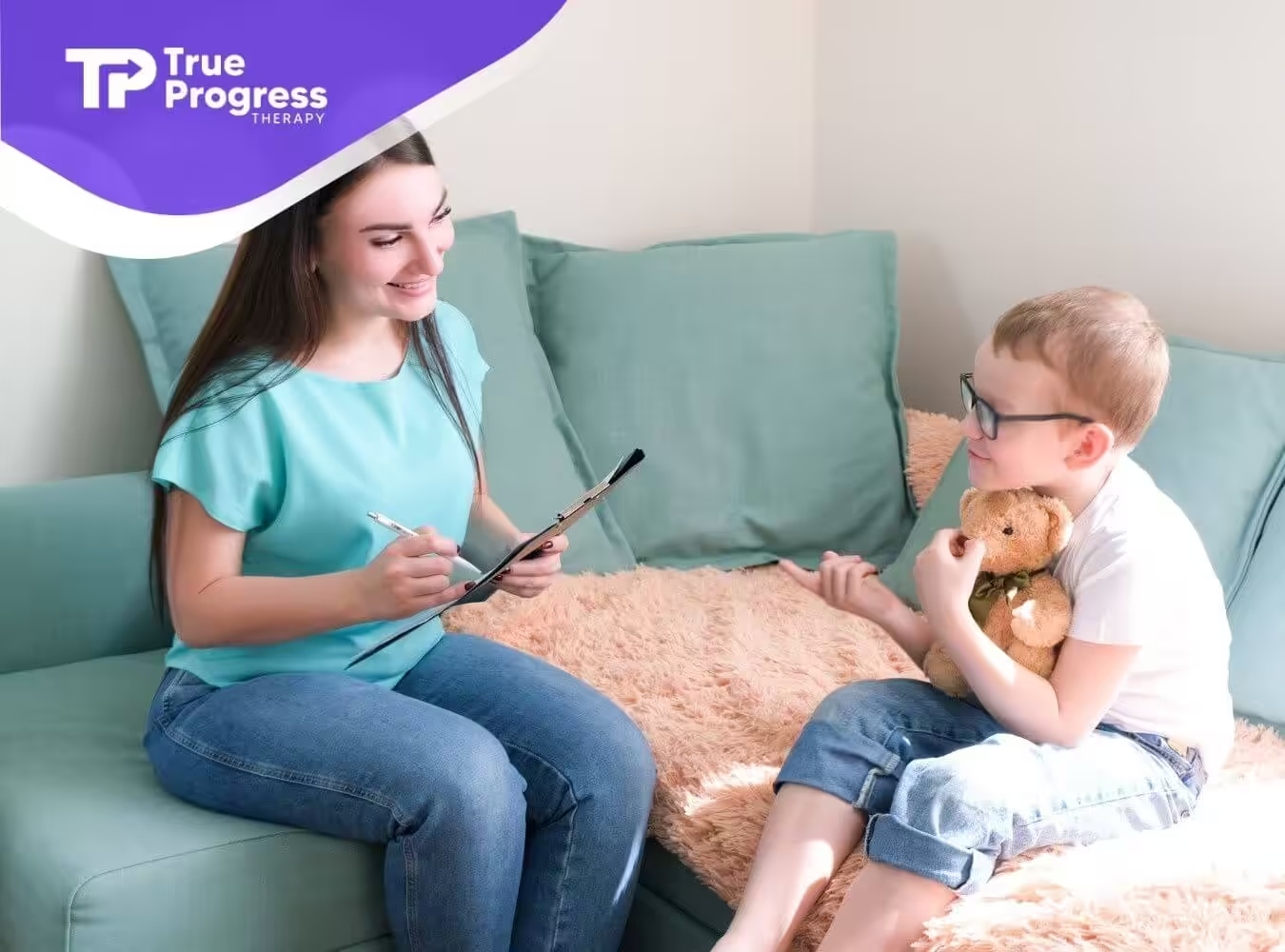
If you’re the parent of a child with autism, chances are you’ve heard the term IEP tossed around at school meetings or ABA therapy sessions. It might sound intimidating at first, but trust me — the Individualized Education Program for autism is one of the most empowering tools you can have on your side.
An IEP gives your child a personalized learning plan built around their strengths, challenges, and goals. With the right collaboration between teachers, therapists, and ABA therapy providers, an IEP turns classroom challenges into meaningful growth opportunities.
What an IEP for Autism Means
An IEP for autism is a customized plan created for students who qualify for special education services. It’s required by law under the Individuals with Disabilities Education Act (IDEA) and is designed to meet each child’s specific academic, social, and behavioral needs.
What’s Included in an Autism IEP
Every IEP is different, but most include these key elements:
- Present Levels of Performance (PLOP): A snapshot of your child’s current skills, challenges, and progress.
- Annual Goals: Measurable targets in communication, social interaction, and academics.
- Support Services: This may include speech therapy, occupational therapy, or ABA therapy for autism.
- Accommodations and Modifications: Classroom adjustments such as visual schedules, sensory breaks, or extra time for assignments.
- Behavior Intervention Plan (BIP): A structured strategy to manage behaviors using positive reinforcement.
An IEP isn’t static — it evolves as your child grows, learns, and develops new skills.
Why an IEP Is Essential for Children with Autism
I’ve worked with many children who struggled in traditional classrooms because their unique needs weren’t being met. An autism education plan like an IEP ensures that your child’s learning environment is adapted to them, not the other way around.
The Power of Individualized Learning
Every child with autism learns differently. Some excel in structured routines, while others thrive through visual supports or hands-on activities. With an IEP in place, your child receives:
- Personalized instruction that builds on strengths and supports challenges
- Legal protection ensuring access to appropriate services
- Team collaboration among teachers, parents, and therapists
- Consistent progress tracking through regular IEP reviews
The result is a supportive environment that encourages growth and confidence — both academically and emotionally.
How the IEP Process Works for Autism
Navigating the IEP process can seem overwhelming, especially for new parents. I always remind families that you are an essential part of the team — your input matters every step of the way.
Step-by-Step IEP Process
- Referral and Evaluation:
The process begins with a referral, often from a teacher, doctor, or parent. The school conducts evaluations across cognitive, behavioral, and social areas to determine eligibility for special education services. - Eligibility Determination:
A multidisciplinary team — including you — reviews the results to confirm if your child qualifies for an IEP under the autism spectrum disorder category. - IEP Development Meeting:
Here’s where collaboration shines. You’ll meet with teachers, special educators, and therapists to outline goals, supports, and accommodations tailored to your child’s needs. - Implementation and Monitoring:
Once the plan is finalized, teachers begin using it in daily classroom settings. Progress is monitored closely, and updates are shared with you regularly. - Annual Review and Updates:
The IEP is reviewed at least once per year to adjust goals and strategies as your child grows. However, you can request an earlier review if you notice new challenges or skills emerging.
Key Goals in an Autism IEP
IEPs for autism focus on developing the whole child — academically, socially, and behaviorally. As an ABA clinician, I often help schools and families create realistic, measurable goals that align with both educational and therapeutic progress.
Core Areas of Focus
- Communication Skills: Using speech therapy, AAC devices, or social scripts to enhance expressive and receptive language.
- Social Interaction: Encouraging cooperation, sharing, and play with peers in structured environments.
- Behavioral Goals for Autism: Using ABA principles to teach self-regulation, flexibility, and coping strategies.
- Sensory Integration: Providing sensory breaks or tools like fidget items or weighted vests.
- Independence and Life Skills: Building self-care, organization, and adaptive skills for daily routines.
These areas help your child build confidence, independence, and readiness for long-term success — in school and in life.
How ABA Therapy Supports the IEP Process
ABA therapy and IEPs share the same philosophy: individualized learning and measurable growth. The difference is that ABA therapy often provides the hands-on support children need to achieve their IEP goals in real-world settings.
Connecting School and Home Through ABA
When I work with families, I align ABA therapy goals with the child’s IEP objectives. For example:
- If a child’s IEP goal is to improve social communication, we might practice turn-taking games during in-home sessions.
- If the plan includes behavioral goals, we’ll create reinforcement systems that can be used both at school and home.
This consistency helps children generalize skills — something many autistic learners struggle with — and ensures everyone on the team is working toward the same outcome.
At True Progress Therapy, our in-home ABA therapy and parent training programs are designed to support IEP goals and empower families. Whether your child attends school in a mainstream classroom or a specialized setting, our therapists collaborate closely with educators across New Jersey to ensure consistent progress.
Tips for Parents Navigating the IEP Process
As both a clinician and a parent advocate, I’ve seen how emotional this process can be. The best advice I can offer is to approach it with collaboration, patience, and confidence.
Practical Tips for Success
- Be prepared: Review your child’s evaluations and come with questions.
- Stay involved: You are a vital part of the IEP team — your insight matters most.
- Request updates: Ask for progress data regularly, not just at annual reviews.
- Communicate openly: Share what’s working at home with teachers and therapists.
- Celebrate progress: Every skill mastered is a step forward, no matter how small.
When parents, teachers, and therapists work together, children with autism can achieve incredible growth.
Building True Progress — One Child at a Time
An Individualized Education Program for autism is more than a legal requirement — it’s a promise. It represents a child’s right to personalized learning, structured support, and compassionate understanding.
At True Progress Therapy, we’re committed to helping families make the most of their child’s IEP through evidence-based ABA therapy, collaborative communication, and meaningful progress.
Ready to strengthen your child’s IEP goals through ABA support?
Contact True Progress Therapy today to learn how our tailored programs can help your child succeed at home, in school, and beyond.
FAQs
- What is the main goal of an IEP for autism?
To provide individualized instruction, accommodations, and support so children with autism can reach their full academic and social potential.
- Can ABA therapy be part of an IEP?
Yes. Many IEPs incorporate ABA principles or collaborate with ABA providers to reinforce behavioral and communication goals.
- How often should an IEP be updated?
At least once a year — but parents can request a review anytime if their child’s needs or abilities change.
Sources:
- https://www.autismspeaks.org/tool-kit/guide-individualized-education-programs-iep
- https://iidc.indiana.edu/irca/articles/practical-steps-to-writing-individualized-education-program-28iep-29-goals-and-writing-them-well.html
- https://www.autism.org.uk/advice-and-guidance/topics/education/extra-help-at-school/northern-ireland/individual-education-plans
- https://pmc.ncbi.nlm.nih.gov/articles/PMC10911052/
- https://kidshealth.org/en/parents/iep.html
Related Posts

Practical ABA Techniques Parents Can Use at Home Every Day
As someone who works closely with families in the ABA field, I can confidently say that parents are one of the most valuable parts of the therapy team. Applied Behavior Analysis (ABA) isn’t just a clinic-based therapy—it’s a way of understanding and supporting behavior that can extend beautifully in
Read article
The Overlap of Autism and OCD Comorbidity Explained
Common Comorbidities with Autism Autism Spectrum Disorder (ASD) often co-occurs with various other conditions, known as comorbidities. Understanding these can provide deeper insights into the complexities of autism and help in developing comprehensive treatment plans. Overview of Autism Comorbiditie
Read article
Beyond the Headlines: Autism Myths vs Facts Parents Deserve to Hear
You might have arrived here wondering if a certain celebrity has autism, or whether something you saw on social media about autism is actually true. While we can’t diagnose public figures—and honestly, speculation doesn’t help anyone—we can walk through what autism really looks like, separate the mo
Read article