

10 Fun Exercises for Children with Autism That Build Strength and Smiles
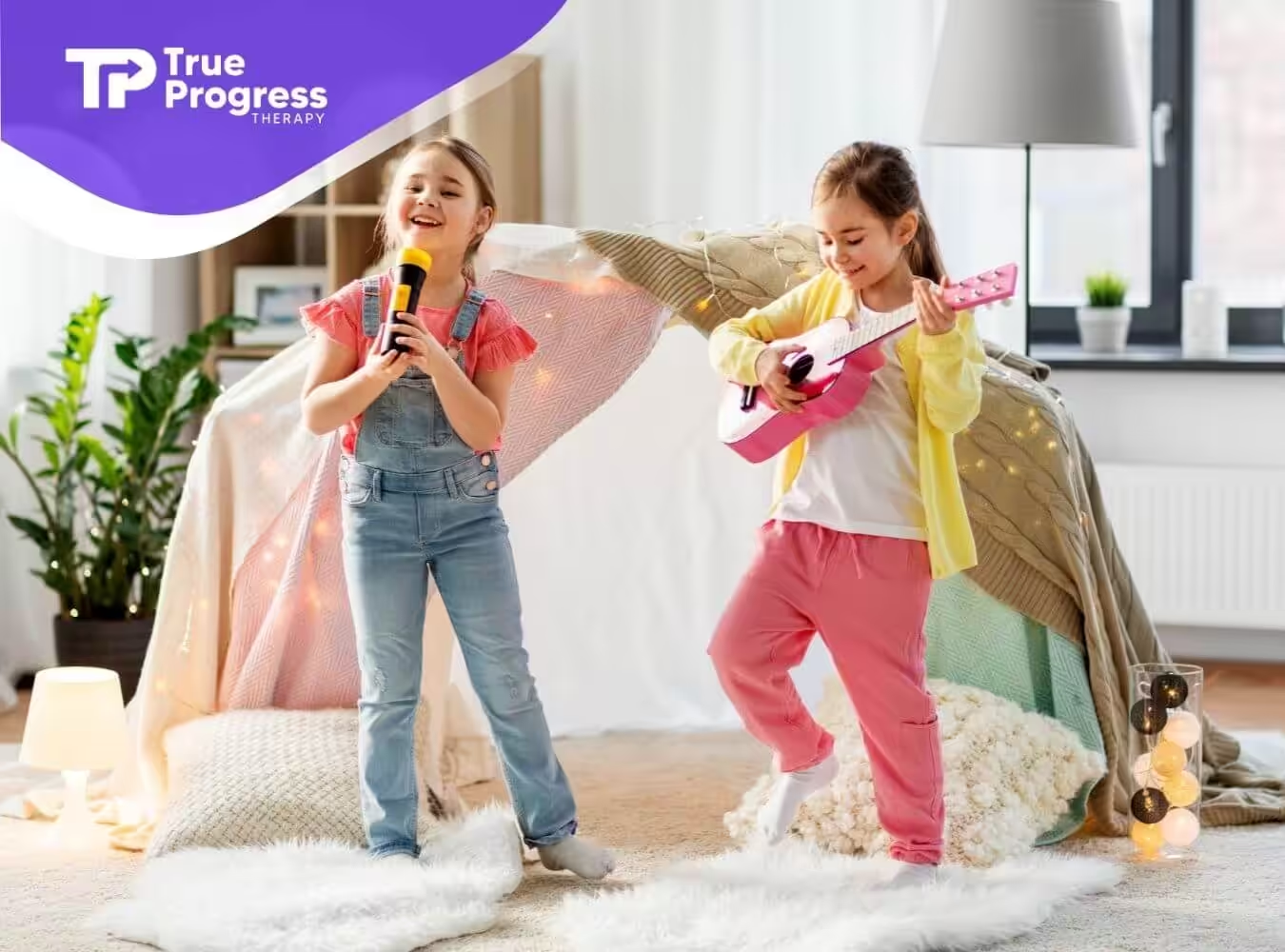
Exercise can be life-changing for children with autism. Beyond keeping kids active and healthy, movement supports focus, emotional regulation, and social skills. The secret is to choose fun, sensory-friendly activities that feel safe and enjoyable. Whether at home, in school, or during ABA therapy, these autism exercises can turn movement into meaningful progress.
Here are 10 fun physical activities for autistic children that promote confidence, coordination, and calm.
1. Animal Walks
Have your child move like different animals — crawl like a bear, hop like a frog, or waddle like a penguin. These playful autism fitness exercises strengthen muscles and boost balance while keeping it fun and imaginative.
2. Balloon Volleyball
A balloon moves slowly and softly, making it perfect for sensory play. Toss it back and forth for gentle exercise that improves coordination and focus.
3. Obstacle Course Adventures
Create a simple indoor obstacle course using pillows, tape, tunnels, or cones. This autism-friendly workout improves body awareness, problem-solving, and following directions.
4. Yoga for Kids
Simple yoga poses help calm the nervous system and build strength. Try child-friendly poses like “tree,” “butterfly,” or “cat.” Yoga is often used in autism therapy programs to support mindfulness and focus.
5. Dancing to Music
Music and movement help autistic children express joy and connect with others. Play upbeat songs and dance freely — it’s great for sensory integration and motor planning.
6. Bubble Popping Fun
Bubbles are a classic in sensory play for autism. Chasing and popping bubbles develops coordination and encourages spontaneous movement.
7. Jumping on a Trampoline
Trampoline jumping is a favorite autism exercise at home. It provides deep sensory input, helps regulate energy levels, and improves balance — just supervise for safety.
8. Simon Says (Movement Edition)
This classic game teaches listening and imitation skills — both important goals in ABA therapy for autism. Keep it simple and reward participation with smiles or small praises.
9. Catch and Roll Games
Use a soft ball to roll or gently toss back and forth. This helps your child practice turn-taking, eye-hand coordination, and cooperative play.
10. Nature Walks or Scavenger Hunts
Outdoor physical activities for autistic children like nature walks or simple scavenger hunts reduce stress and boost curiosity. Look for leaves, rocks, or flowers together — it’s learning in motion!
At True Progress Therapy, we know that learning happens best through play. Our compassionate team offers in-home ABA therapy and parent training across New Jersey, helping families use autism exercises and daily routines to build essential life skills.
Ready to make exercise part of your child’s progress plan?
Reach out to True Progress Therapy today to explore personalized ABA therapy for autism — where every movement leads to growth.
FAQs
1. What are the best exercises for kids with autism?
Fun, structured activities like yoga, obstacle courses, and trampoline jumping work great for improving balance, focus, and sensory regulation.
2. Can physical activity help children with autism?
Absolutely! Regular movement supports attention, reduces anxiety, and encourages social interaction — making it a vital part of autism therapy.
3. How can I motivate my autistic child to exercise?
Keep it fun, predictable, and rewarding. Use visuals, music, or simple games to turn exercise into something your child looks forward to.
Sources:
- https://pmc.ncbi.nlm.nih.gov/articles/PMC9813515/
- https://www.frontiersin.org/journals/psychiatry/articles/10.3389/fpsyt.2024.1462601/full
- https://my.clevelandclinic.org/health/treatments/25197-applied-behavior-analysis
- https://www.autismspeaks.org/applied-behavior-analysis
- https://pmc.ncbi.nlm.nih.gov/articles/PMC7176323/
Related Posts

Finding Strength Through Autism Family Counseling Options
Understanding Autism Family Counseling Autism family therapy is a specialized form of counseling designed to address the unique challenges faced by families with a child or children diagnosed with autism spectrum disorder (ASD). This counseling aims to enhance communication, understanding, and overa
Read article
Brain Exercises for Autism: Quick Start Guide
Brain exercises for autism can support focus, coordination, and learning. This short guide shares evidence-based ideas families can use at home or with care teams. What are Brain Exercises for Autism? Structured activities that engage motor, visual, and cognitive pathways to boost attention, memory,
Read article
Birthday Party Tips for Children With Autism: Reduce Stress and Build Confidence
I’ve watched many parents worry about how their child with autism will handle a birthday party. The unknown can create a lot of anxiety for both parent and child. I believe that preparation, patience, and the right tools can make a big difference. Social events can become less scary and more success
Read article